Paul Wiersbinski
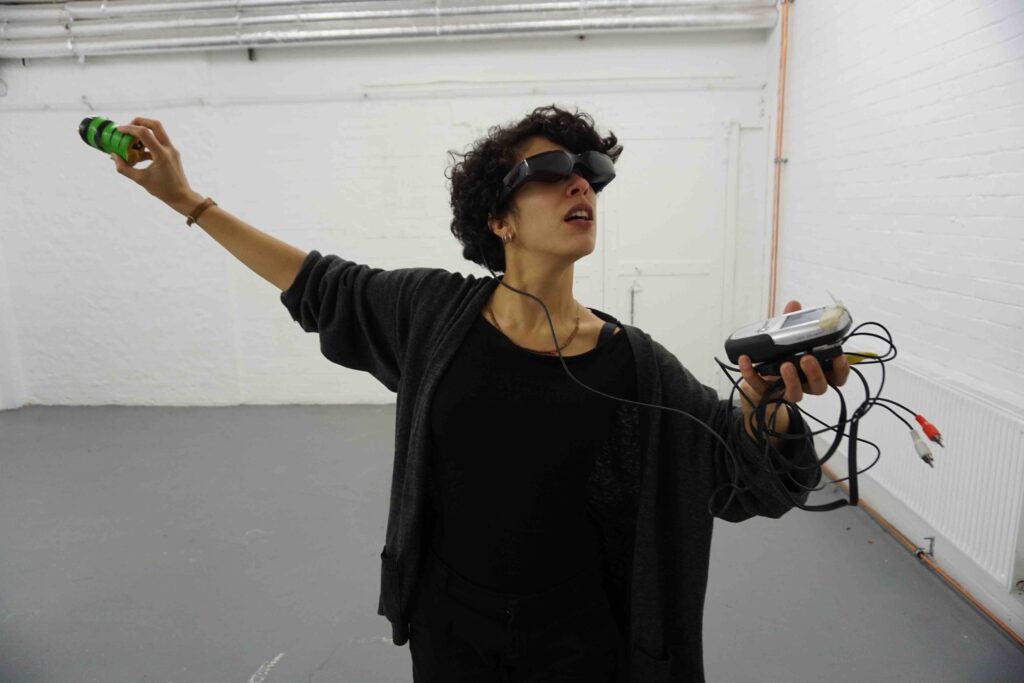
Fig. 1. Mortal Toys -> https://vimeo.com/260977011 (Password: MTSpace)
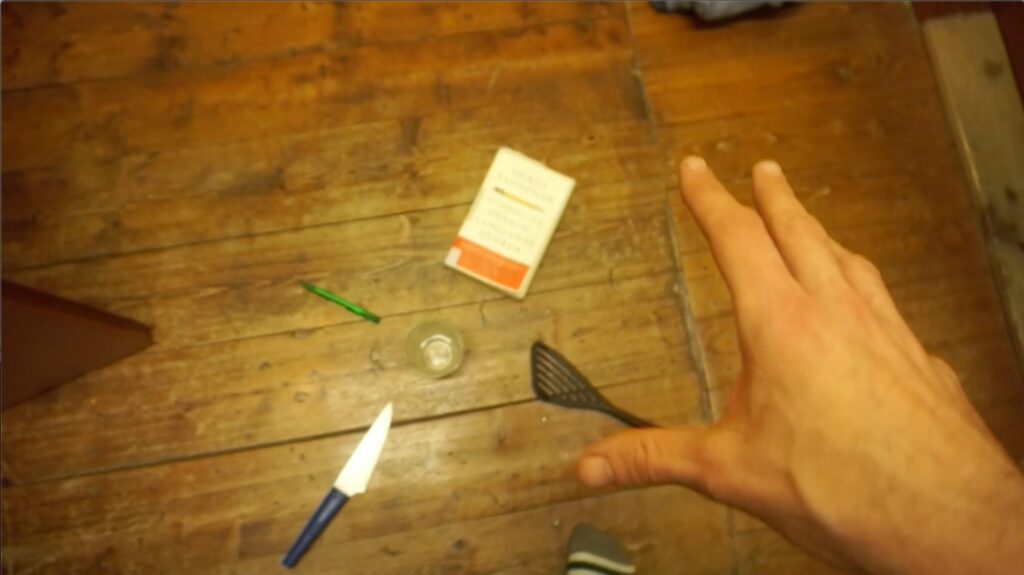
Fig. 2. Remote Rules and Rituals -> https://vimeo.com/599441898 (Passwort: RRR Trailer)
At the beginning you see the title: “Buildings are spaceships surrounding our meat bodies”, underneath you read my name, my pronouns, my institutional affiliation, my email address and a link to the social networks I use.
Then I’ll show you a picture of me as a child growing up in a German suburb. My parents both worked, so I had plenty of time to play. Initially, my parents were very against giving me access to computer games because they thought it would turn me into a stupid and lazy person and that it would prevent me from developing creative and social skills.
So out of sheer boredom, I would sometimes take the Monopoly game off the shelf and play it with myself, representing all six different parties, building houses, collecting rents, building a virtual city ruled only by money and greed, and beating myself until only one player had the upper hand. I would win and lose against myself every time. This experience stayed with me as one of my fondest childhood memories, and it wasn’t until a few years later that I found out what was so unique about it.
Next, you will see a picture of a chessboard and I will talk about the book “The Chess Novella”, which Stefan Zweig wrote during the Second World War in his exile in Brazil. The author describes the story of a prisoner of the Gestapo, the secret German Nazi police. They try to break him psychologically through total isolation. He slowly goes insane, but manages to steal a book from one of his tormentors. Instead of a piece of diversionary literature, he only finds a collection of the most important chess games in history and then begins to form small chess pieces out of bread and play each game on the ceiling of his bed, which happens to resemble the white and black squares of a chessboard. After months of isolation, he finally begins to play against himself again and again until he finally falls into a state of “chess poisoning”.
Now the black and white squares of the chessboard slowly begin to merge, creating a kind of meditative tapestry to illustrate how, years later, the protagonist of the story plays against the reigning world chess champion and almost defeats him, but the game pulls him back into the state of madness he experienced in prison and the real and imaginary mix until he finally has to stop playing.
The flickering of the chessboards behind me increases in frequency, and it becomes somehow uncomfortable and psychedelic, because I am talking about chess as one of the oldest and most universal games of mankind.
At first, chess was just a simulation of real war, the board was a map and the individual pieces represented the different elements of the army, infantry, cavalry, archers, commanders, etc. Later, chess became a great pastime and sport played internationally and a sign of culture and intelligence. And last but not least, chess became a training program for computers to defeat human players, and some consider Garry Kasparov’s defeat of the computer Deep Blue in 1997 as the seminal event of entering a modern science fiction world in which our own technical creation defeats the most capable human players.
Now you see the image of a large room with many monitors and computers, each with an Asian-looking young man sitting at it. We see a virtual goods factory where, for example, in the famous game “World of Warcraft”, Chinese players spend 16 hours a day collecting virtual gold and items to sell them for real money to Western consumers, who are estimated to pay at least a billion dollars a year for this service.
Now you can see a picture of a browser game in which a white goat is standing in a green meadow with mountains in the background and black and white sheep coming towards it from the side. It is a picture from the game “Zottel rettet die Schweiz” (Shaggy saves Switzerland), which was commissioned by the largest Swiss political party to draw the attention of young Swiss computer gamers to the dangers of illegal immigration.
And I could show you many more images or quotes about how games have become the greatest entertainment titles our society has ever produced and the potential currently being projected into them as a market for new technological gadgets, but instead I want to emphasize that social interactions in general are subject to change and the basic human need for direct communication and affection remains.
To envision this, one can think of any recently constructed contemporary art museum that looks like a set for a science fiction movie or a stranded spaceship from the outside and offers us spaces inside that are actually meant to free us from our physical, everyday perception, created to take us into a different, unreal experience and free our minds as we communicate with the artwork that may no longer even exist in the reality of physical space.
Due to the artificial set-up of most contemporary exhibitions, I consider the audience’s relationship to an artwork as a virtual experience, as the work is meant to evoke intellectual thoughts and emotions in a space that is considered to be outside of society. The white cube therefore resembles a 3D grid or holodeck, where visual information is only used to lead to a different, unreal experience. This approach to meaning-making is not purely rational, but physically immersive in actual haptic or virtual space and therefore offers a plausible alternative and complement to text- and idea-based signification in the natural sciences.
So now we slowly enter the holodeck, which is a vision from the future and at the same time all the walls are remotely reminiscent of a chessboard. Next, one can imagine the creative applications that have become so limitless and the artificial intelligence that is such a perfect copy of the human mind that anyone can create the manifestation of their dreams on a purely symbolic level. The holodeck is of course controlled by language, the realm of the symbolic, the hedonistic, the pleasure principle. In it we can fulfill our most intimate and fantastic desires, but only the ones we know about.
This is one of the main problems we have with imagination today. Let’s all imagine a perfect world, for example a lecture where everything the speaker says is illustrated with funny pictures from the internet. We listen, we laugh and then we leave and immediately forget everything that has just been said.
Imagine someone lying on a couch during a psychoanalysis and talking about dreams, family and perversions. In this interactive process, topics emerge that the speaker did not expect, suddenly he or she can express fantasies that he or she does not know. The problem, however, is that a hundred years later, these models are no longer accurate enough because psychology has become such a common measuring tool. Today, everyone knows how to behave at a job interview. So we need more accurate tools that tell us what we really want.
So now you can imagine modern gaming applications that are slowly overcoming simple psychological models. When you fill out the test for an online dating platform, you may be asked to indicate your preferences regarding the visual aspects of your partner, but you will also have to answer much more abstract questions. Soon you may even have to navigate through a virtual maze or write a short text on a topic of your choice. You will be judged on your visual, spatial and linguistic behavior, which you yourself do not know and which is therefore an accurate measure of your desires.
Now you can also imagine a modern HR office where the HR department is still run by people, but they no longer look at which university you studied at or what professional experience you have when you apply. Instead, they look at the score of the game you had to play when you applied. This tells them much better how social you are, what special skills you have and how long you will stay with the company and how you could develop.
Similar applications are used in all areas where large amounts of data need to be accessed and where people’s behavior needs to be assessed, as the human brain is too complex to be captured by ready-made algorithms. Instead, evolving and motivating games need to be played, constantly evolving with participants to provide accurate and useful information. Big data or the internet are completely meaningless on their own, it is the constant input and interactivity of the user that makes them such powerful tools in our society.
Yet all these games are only virtual and they always describe a world without consequences and risks, so they ultimately lack the challenge and thrill of reality.
Now imagine a small art space where the social experiments that performance artists have carried out take place. Whether it was 100 years ago when the Dadaists performed at the Cabaret Voltaire during the First World War, mocking all authority while the world collapsed around them, or 50 years ago when Fluxus and video performances in galleries created vast physical playgrounds, but always referencing hidden virtual issues in society.
Now imagine what the surrealist Andre Breton actually meant when he said that the greatest surrealist work was to shoot a gun into a crowd of innocent people. What would he think if he could see that this provocation has become a realistic possibility in most of the 3D shooters you can play today?
Finally, I would like to ask you to imagine a real city with a grid system. You can walk around the streets, but sooner or later you will be exhausted and unable to enter most of the rooms. The doors are locked, the areas restricted. The skyline may just be an illusion, we couldn’t tell the difference. In some of the new computer games, it is possible to enter any house, talk to or kill any character, pick up any object and experience the world without any restrictions. So virtual reality is still a limited reality, but soon we may find that it is less limited than the world we used to live in. In it, we are connected to everything and everyone at all times. It is the space itself that has become part of our body.
Paul Wiersbinski is an artist and researcher. He holds lectures and presentations: a.o. “Push your art” Palais de Tokyo, Paris (2013), “Art in the Age of Earthquakes” Martin-Gropius-Bau, Berlin (2016), “Re:publica” Berlin (2019, 2021), “The Whole Life Academy“ Haus der Kulturen der Welt, Berlin (2020-22), “Hurricanes and Scaffolding“, Umeå University (2024) and worked as an EU-expert for “Resonances III“ at the Joint Research Centre (JRC) in Ispra (2018-2021).