Arooshi Bagri Maheshwari
Gulammohammed Sheikh’s work is a book of narratives. Some that you engage with visually while others trigger your cognitive understanding. But in either way, it is an experience of looking at the idea of contemporary while turning through the pages of history, mythology and cultural memory. In India, the beginning of the year 2025 witnessed a retrospective of the artist’s life and works distinctly reflecting this observation at the Kiran Nadar Museum of Art, Saket, New Delhi. Curated by the well-known art historian and curator Roobina Karode, the show titled, ‘Of Worlds Within Worlds – Gulammohammed Sheikh, A Retrospective’ was on view from 6 February 2025– 25 July 2025. Showcasing a gamut of his artworks spanning six decades, the exhibition features his paintings, both large and small, including two-dimensional panels as well as three-dimensional kaavads, spontaneous sketches, gouaches, pen and ink drawings, digital collages, meticulous accordion books, ceramic sculptures, and graphic prints. Walking through the exhibitionary space feels nothing short of a visual retreat surrounded by his version of multiple stories.
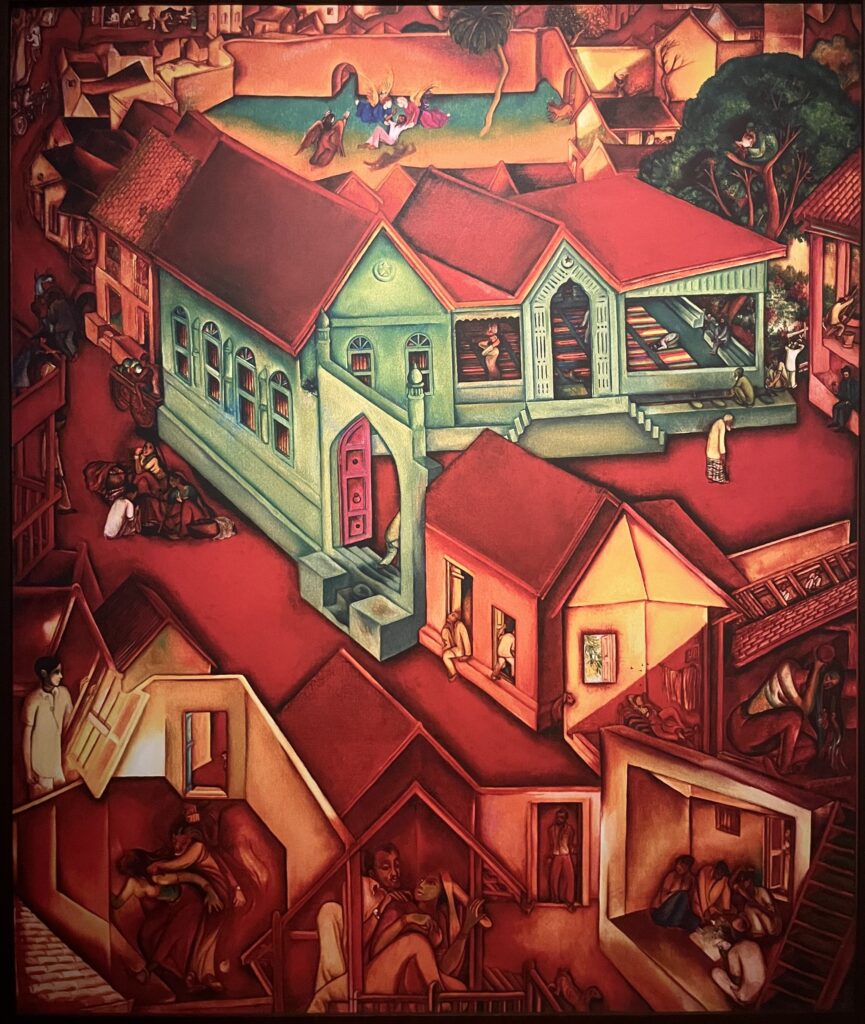
Fig. 1 Gulammohammed Sheikh, Speaking Street, 1981, Oil on canvas.
Image courtesy: Arooshi Bagri Maheshwari.
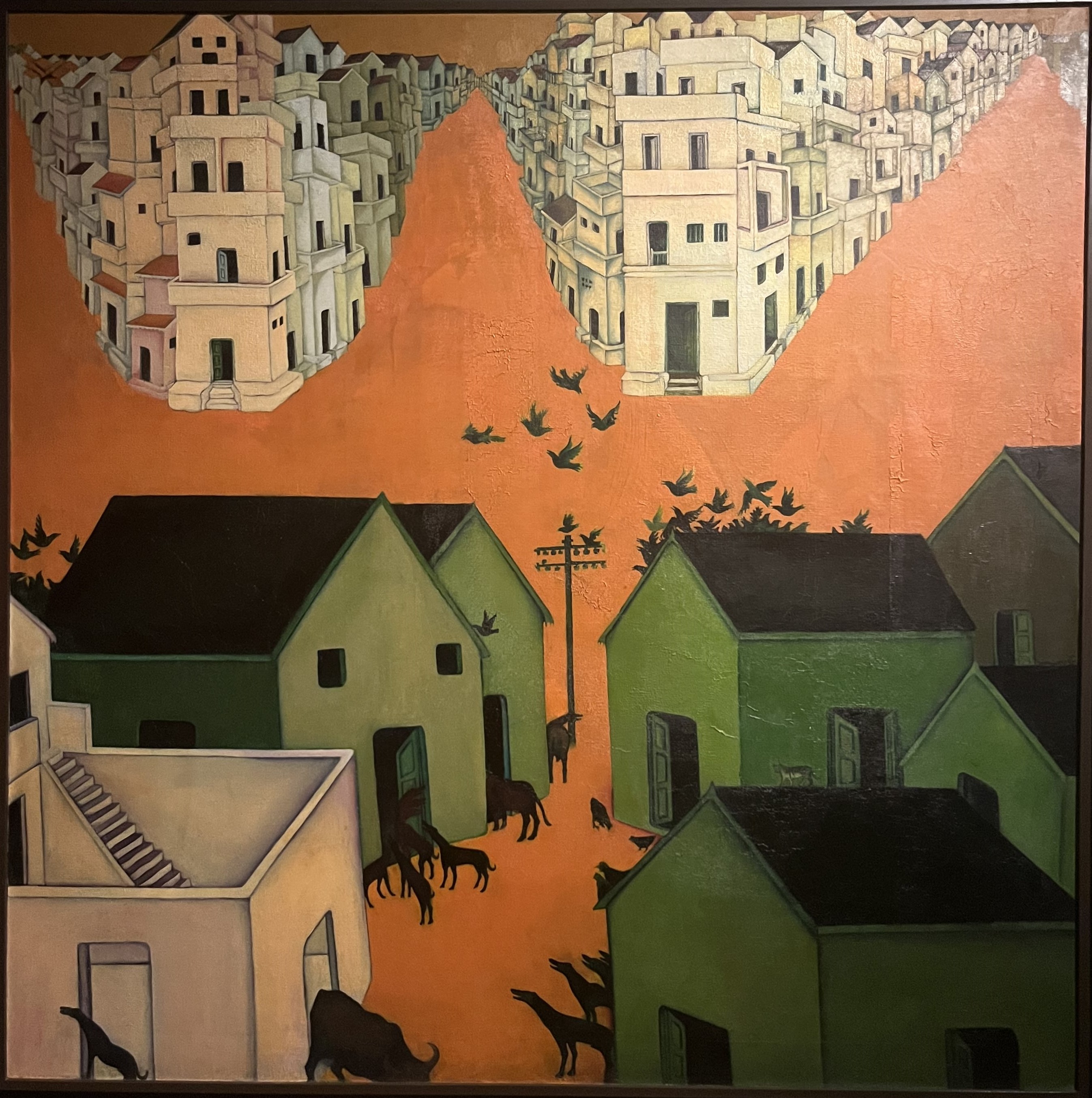
Fig. 2 Gulammohammed Sheikh, Speechless City, 1975, Oil on canvas.
Image courtesy: Arooshi Bagri Maheshwari.
Born in a conservative family in the Indian city of Surendranagar, Gujarat; Sheikh studied at the Maharaja Sayajirao University of Baroda and the Royal College of Art, London in the early 1960s. From the close-knit neighborhoods, to the chaotic everyday streets, the life and cities of Gujarat that he resided have been integral to his artistic expression. (Fig. 1) Speaking Street (1981) for instance, is saturated with the hues of life in a small town. There are portrayals of domestic life, subtle love and intense violence, lazing people and mundane conversations, childhood sayings and religious congregations. The sheer warmth of Sheikh’s palette in this painting evokes a sensual tactility heightening the essence of these lived stories. Responding to the rising political consciousness among Indian artists in the 1980s, (Fig. 2) Speechless City (1975) captures the traumatic state of imposed Emergency (1975–77) in the nation. The usual chaos of his street characters is seized by the visual howling of black dogs and cawing crows in this work. The earthy tones –resonating with the color scheme of the national flag– increase the tension of witnessing an abandoned city. The work provides a peeking glance into the urban life of post-colonial India through the lens of social, cultural and political activities that were enacted.
Although the huge canvases installed at the exhibition appeal to the viewer’s intellect, the wooden kaavads captivate one’s visual curiosity. Unlike artworks that are usually meant to be seen from a distance, these wooden shrines inspired by the storytelling tradition of Rajasthan, invite the viewers to watch up close. Contrary to the traditional ones, Sheikh’s kaavads adopt multiple formats opening in all four directions. Ranging from handheld to architecturally scaled, these syncretic shrines engage the viewers to walk around, interact, combine or even isolate the images that each panel unfolds.
The three-dimensional paintings allow the viewers to experience the layered persona of Sheikh’s practice. Michael Baxandall in his discussion about the production of artists in fifteenth-century Italy mentions painters as “professional visualizers” and viewers as “active institutions of interior visualizations”.¹ His argument emphasizes that such experiences enable the enactment of the viewer’s perception and provides “a curious function” to the artist’s visual composition.² The kaavads showcased in the exhibition also intrigue the viewer’s psyche with the permutations of its visual narration as one journeys around the artwork. Unlike a horizontal or vertical canvas, they allow the viewer to navigate their pace, direction or even determine aspects like the frontality as they approach each door.
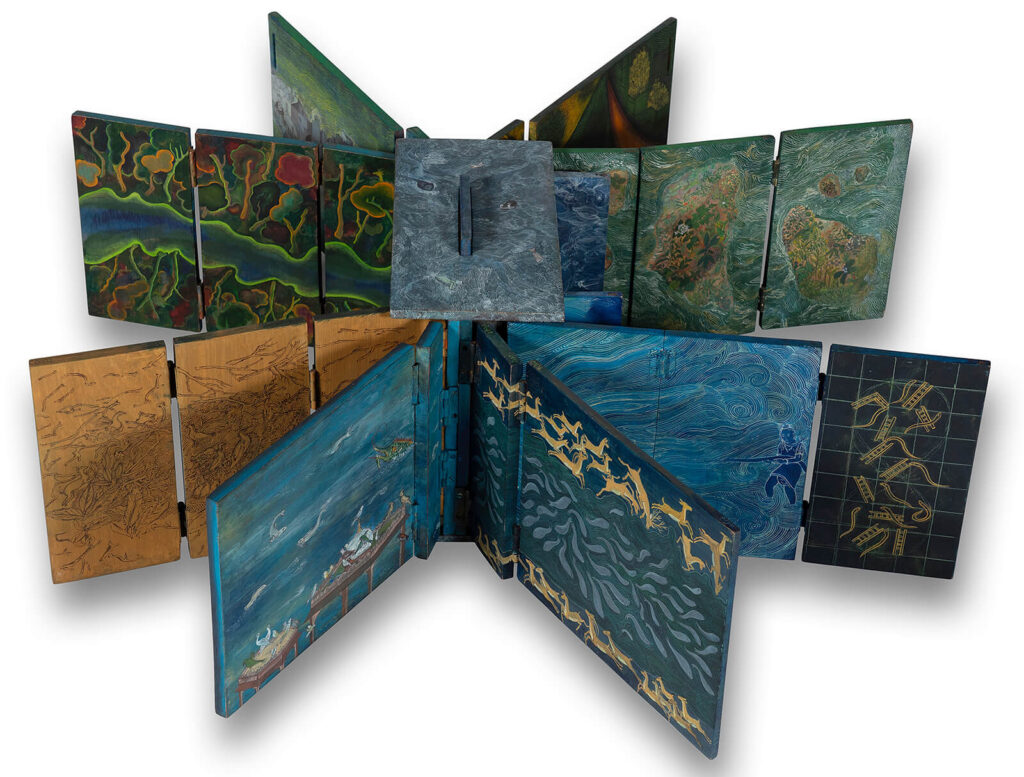
Fig. 3 Gulammohammed Sheikh, Deluge, Water, Life, 2019–2024, Casein and water colour on Kaavad. Image courtesy: Chemould Prescott Road and the artist Gulammohammed Sheikh.
Sheikh’s conscious playfulness with the subject matter and form is reflected in (Fig. 3) Deluge, Water, Life. Placed on a pedestal, the work is a response to the news of the devastating floods in Srinagar, Kashmir. A three-fold wooden panel hangs open with an illuminating river flowing through the forest. The linearity of blue accentuates its rippling flow. But the crevice of a pull-out board in the centre, reveals a gushing force of the flood water underneath that can drown every creature. Objects are seen submerged and floating due to water entering the households. The overflowing river in the adjoining door, engulfs the whole city in a manner that it appears to be the hill city’s natural backdrop. Each panel reveals a brilliant narrative of the devastation, aftermath and the coping mechanisms to the calamity.
In addition to the TV footage that the artist came across of the Srinagar floods, Sheikh also paints absurd visualizations. There are groups of people gathered at elevated terraces visualized as some sort of a rescue boat that might help them sail away. Furthermore, while capturing the islandic transformation of the hill city, the artist incorporates a simple drawing quoting the Samudra Manthan, the ‘cosmic deluge’, over a deep blue panel. Another contrasting three-fold door showcases the muddy flood water carrying broken branches, fallen trees and slithering reptiles drawn with the characteristic of dry point engraving. This juxtaposition of drawings, photographs and quotations make his work anecdotic of all kinds of content.
His interest in the layered understanding of time and space allowed him to engage with different art traditions and practices in his long stretched oeuvre.³ As an artist, writer, poet, curator and art historian, Gulammohammed Sheikh never desired to make religious paintings but instead reflected on certain belief systems. A chapter written by Sheikh himself, titled, Making of a Visual Language: Thoughts on Mughal Painting, provides us with two intriguing lenses to approach the artist’s work. He begins the discussion by claiming that acknowledging the contemporary visual culture in which a painting is made is crucial to understand the tradition of paintings. Designating artists as “formulators of vision”, he reassures about the impact of such perceptions on the visual sensibilities of the artist.⁴ This framework of thought allows us to investigate the pictorial development of his artworks specifically engaging with the choices exercised by the artist. In addition to this, he argues that, “The role of the viewer or patron was interchangeably that of a participant-receiver, or an insider-outsider.”⁵ He reflects upon the artist’s conscious effort to allow his viewers to employ their perceptive thoughts and establish a dialogue with the artwork. This helps us recognize the powerful stance of a viewer to read through his works.
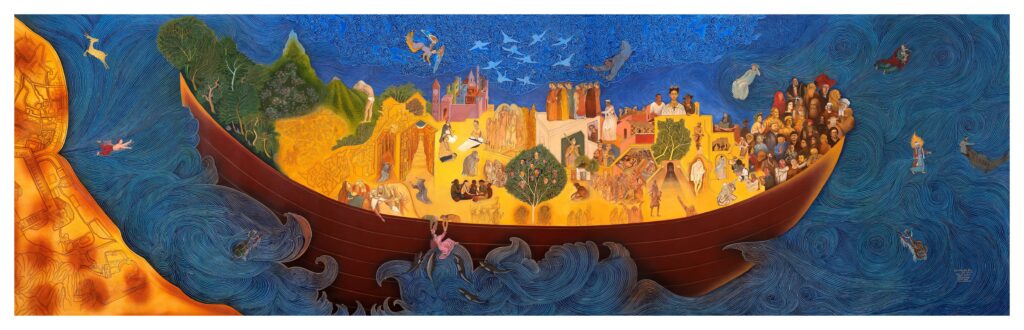
Fig. 4 Gulammohammed Sheikh, Kaarawaan, 2019–2023, Acrylics on canvas.
Image courtesy: Chemould Prescott Road and the artist Gulammohammed Sheikh.
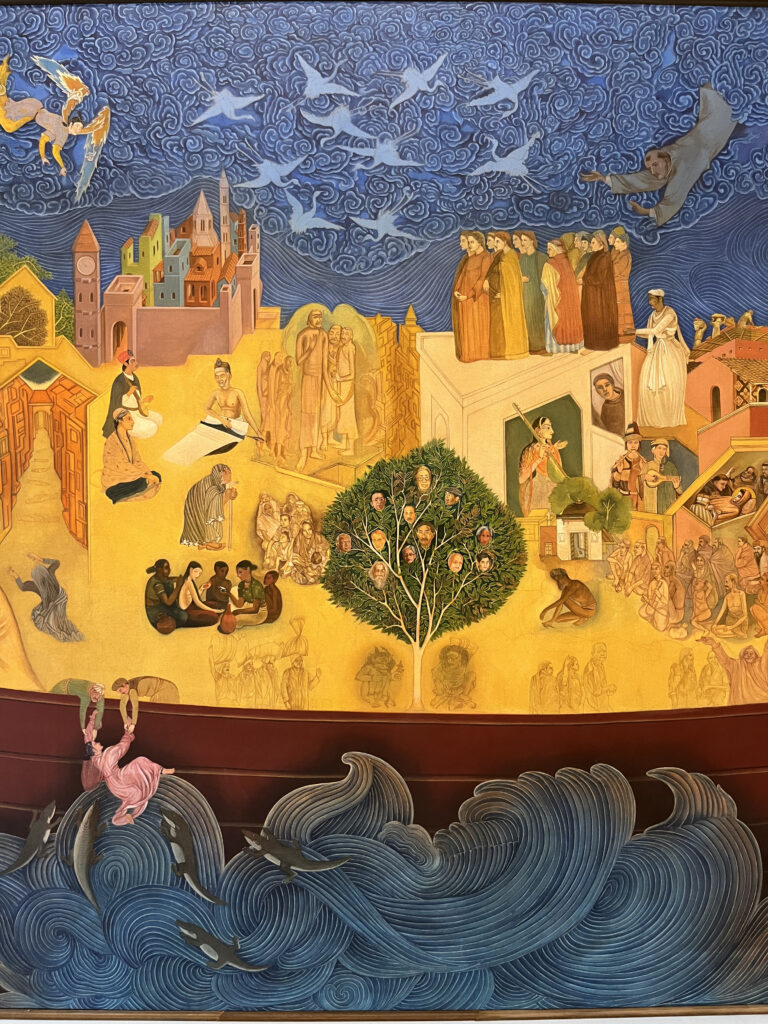
Fig. 5 Detail of Kaarawaan, 2019–2023. Acrylics on canvas.
Image Courtesy: Arooshi Bagri Maheshwari.
Reflecting on the idea of journey and memory, Sheikh’s recent work (Fig. 4) Kaarawaan is a 21-foot-long canvas. The artwork flaunting its remarkable horizontality, provides an allegorical visual vocabulary to engage with. What appears to be a gigantic boat enveloped by raging waves and dark swirling clouds from a distance; actually, encapsulates the artist’s life experiences and the essence of his practice. Painted between 2019 and 2023, the art work reveals Sheikh’s state of mind voyaging through his artistic, writerly as well as art historic journey. In the ark’s centre is the representation of a speaking tree of important literary figures. Surrounding this, he paints visual quotations of miniature paintings from Mughal and Kishangarh school, likeness of Indian saintly traditions, and the modern Indian artist Amrita Shergil’s celebrated work Bride’s Toilet (Fig. 5). To the extreme right of the famous ark, inspired by the 18th century Pahari painter Nainsukh’s work, is the family of artists including Italian renaissance masters, modernists, Indian progressives, Japanese artists and many others.
Although the artist painted the canvas with a series of art historic images, he carefully devised ways to situate the relevance of the work into the contemporary. Ruminating over his image-making choices, we come across a range of art historical quotations showing pain and suffering. The Dying Inayat Khan from Mughal miniature tradition, drawings that trigger the dreadful visuals of the Indian migrants, and the trials and tribulations of the working class in the country at the time of the pandemic. Amidst this, yet again, Sheikh stresses on the relevance of Gandhi in our lives. Gliding our vision to the left, we see a rather disturbing visual nestled between the gorgeous mountains and forest. The artist associates a group of mourning women with the drawing of corpses in the alley, digging of burial graves, vanishing houses and a distorted cityscape. Aware of the extremities of mankind leading to terrifying situations in Ukraine and Gaza; Sheikh paints this huge canvas granting his viewers multiple narratives to encounter, and many sites to visually enter this masterpiece.
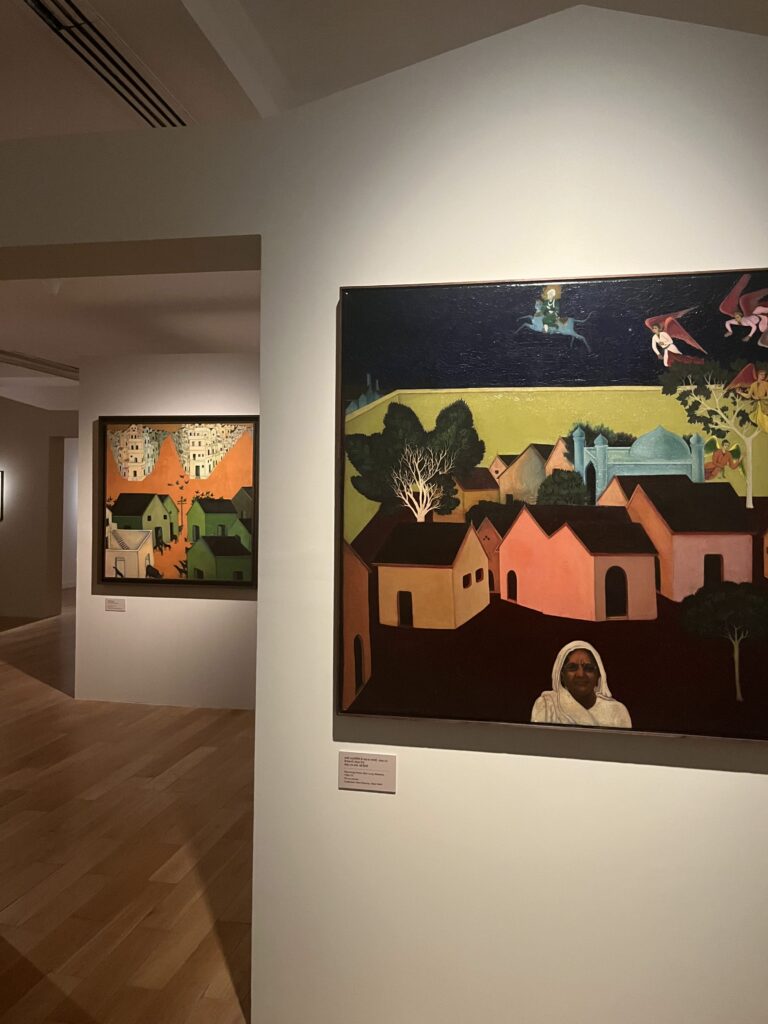
Fig. 6 Exhibition view of ‘Of Worlds Within Worlds-Gulammohammed Sheikh, A Retrospective’, 2025, Kiran Nadar Museum of Art, Saket. Image Courtesy: Arooshi Bagri Maheshwari
The exhibition as shown in Fig. 6 can be conceived as a quintessential fusion of the artist’s space-making strategies. Constructing spaces that reveal a multi-perspectival viewing through shifting vantage points, the show literally recreates Sheikh’s “worlds within worlds”.⁶ Chronicling his works, life and events, the exhibition itself appears like a full-blown kaavad inviting the viewers to move in and out its niches allowing them to witness his complex relationship between memory, identity, observations and inspirations. Designed as a journey around the artist’s multifaceted vision, one embarks on this experience with a close glimpse of his archival materials, writings, letters, photographs, drawings and early renderings. It reveals how with every step, every drawing, Sheikh’s artistic, historic and perceptive memories are incorporated into his visualization of the artwork. Art history for Sheikh has been a journey back and forth into the past and present. He writes, “Living in India means living simultaneously in several cultures and times …. The past exists as a living entity alongside the present, each illuminating and sustaining the other”.⁷ This idea attests the co-existence of observed reality and artistic curiosity in his works by initiating a conversation between his social, cultural and political engagements. The exhibition in its totality is a celebration of the diverse artistic journey of the artist and pedagogue, placed alongside his fellow artist friends and contemporaries.
¹ Baxandall, Michael. ‘The Period Eye’, in Painting and Experience in Fifteenth Century Italy: A primer in the social history of pictorial style, (Oxford University Press, 1988), 45.
² Ibid., 46
³ Sheikh, Gulammohammed. ‘Among Several Cultures and Times’ in Carla M. Borden (eds.). Contemporary Indian Tradition (Washington: Smithsonian Institution, 1989), 107–120. https://cdn.aaa.org.hk/_source/gms-journal1985-jai-amongseveral.pdf
⁴ Sheikh, Gulammohammed. ‘Making of a Visual Language: Thoughts on Mughal Painting’ in B. N. Goswamy (eds.). Indian Arts: Forms, Concerns & Development in Historical Perspective (New Delhi: M. Manoharlal Publishers, 2000), 299–324.
⁵ Ibid., 307
⁶ Karode, Roobina. “Of Worlds Within Worlds-Gulammohammed Sheikh, A Retrospective”. The exhibition essay at Kiran Nadar Museum of Art, Saket, New Delhi. 2025
⁷ Sheikh, 1989, 107.
Arooshi Bagri Maheshwari is an Indian artist and doctoral scholar in Art History & Visual Studies at the Department of Fine Arts, Sarojini Naidu School of Arts and Communication, University of Hyderabad, India. Her research inquiry looks at exhibition histories specifically focusing on the making of exhibitions as a historical and cultural turn at the beginning of millennium. Her recent publication includes a review writing titled, “Gandhi in Artistic Representation: Recent Works of Adarsh Baji as a Departure from his Contemporaries” (2024).