Noel Meek
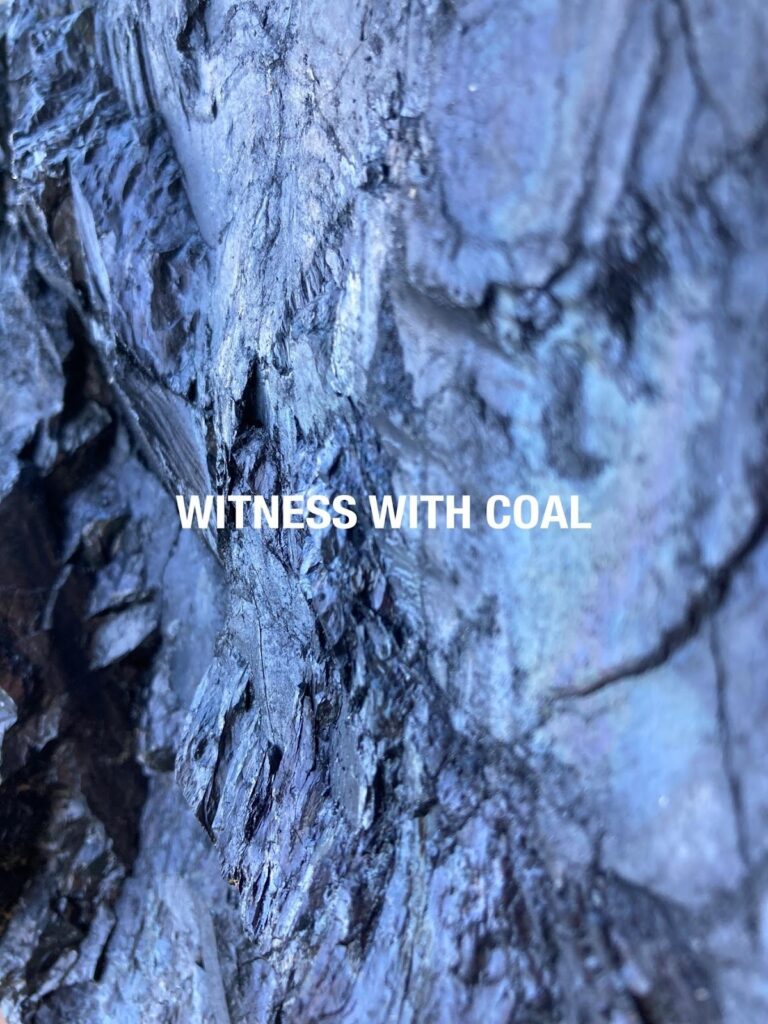
Fig. 1 Noel Meek, Coal Score (Witness), 2025, digital image.
Presented here are three performance scores that allude to speculative approaches to being with the more-than-human. Three simple imperatives suggest performative inroads to understanding the ontology of another being far removed from, but deeply implicated in, our own ontology: Coal. By asking us to speculate on and experiment with acts of intimacy, witnessing, and solidarity, these scores ask us to extend to Coal the same emotional work we might to humans caught up in disastrous situations.
If one of the greatest failings of our dominant ontology is a failure of imagination [1], these scores prompt an imaginative response by speculating on how humans might find meeting points across worlds. We exist in a pluriverse, a multiplicity of worlds, an array of ontologies, “negotiating their difficult being together in heterogeneity” [2, p. 4]. But currently one world dominates our attention. Often referred to as “objective” [3], it is a world that is, as Jack Halberstam puts it, “inherited from colonialism, the afterlife of slavery, and Western philosophy” [4]. By developing these performance scores, I hope to illuminate other worlds that exist alongside this dominant one, stimulate human imaginations in response to them, and to highlight the “non-human voices that have been systematically silenced by modern dualist and extractivist ontologies” [5, p. 38]
The story of my world as relates to this context involves precisely this extractivist ontology. I come from a family of coal miners stretching back generations. Hailing from the post-industrial town of Falkirk in Scotland, my extended family emigrated to the settlement of Denniston in Kawatiri, Te Waipounamu, in the 1920s to continue their tradition of coal extraction. While the underground mines of the Denniston Plateau became uneconomical by the 1960s, my brother now works at the Stockton open-cast mine less than ten kilometres north of the plateau.
For me, this family history of extractivism crashes hard against contemporary ontological changes underway in Aotearoa. In 2014 Te Urewera was granted legal personhood by an Act of the New Zealand Parliament. This Act enshrined Māori ontology into our post-colonial society, acknowledging that the landscape is ‘ancient and enduring’, with ‘an identity in and of itself’ and that it has ‘its own mana and mauri.’ (Te Urewera Act, 2014) This was followed in 2017 by an Act granting personhood to the Whanganui River (Te Awa Tupua Act 2017) and recently Taranaki Maunga was legally established as ‘a living and indivisible whole incorporating all of its physical and metaphysical elements.’ (Te Ture Whakatupua mō Te Kāhui Tupua 2025)
Te ao Māori is the closest world to my extractivist-settler ontology, and the one that calls most urgently. The ontological dissonance between my world and te ao Māori couldn’t be more jarring, but it is also inspiring. These scores derive directly from this meeting of worlds, particularly the question that arises when extractivism meets the mauri of the more-than-human [6].
Coal is caught up in multiple narratives of apocalypse. It is complicit in histories of lung disease and cancer in mine workers, of toxic pollution in waters and landscapes, of annihilation of ecosystems through the removal whenua for mines, and of course, through its burning, in the catastrophe of climate collapse. But none of this is Coal’s fault. As Métis scholar Zoe Todd puts it: “It is not this material drawn from deep in the earth that is violent. It is the machinations of human political-ideological entanglements … that make this … progeny a weapon.” [7, p. 107]
Once Coal was forests and wetlands before it lay under the earth for some 50 million years, quietly coexisting with intraterrestrial microbes [8]. The problem lies not with Coal itself, but with the way a dominant extractivist ontology objectifies, commodifies, and ultimately sacrifices Coal.
Coal’s transformations and the immense time it has spent on Earth means it exists in a very different world to any human one. It has witnessed extraordinary change that predates humans, even Aotearoa itself. Its perspective on time and existence is unfathomable. As Michael Richardson puts it in Nonhuman Witnessing: “a mountain and a person possess asymmetric capabilities, with one, for instance, able to endure across eons and the other able to marshal linguistic resources that facilitate communication.” [9, p. 9] Despite our miraculous ability to communicate and to conceptualise, we have not extended these abilities to encompass Coal, and because of this its world has been literally torn apart by a short-sighted unimaginative ontology. Moreover, its experience, its knowledge, its mauri are obliterated in furnaces of eternal capitalist growth. The lessons Coal might teach us are lost. The fertile meeting place between ontologies is ignored in “the earth shattering of … bonds of shared ecological and inhuman worlds.” [10, p. 1]
This earth shattering creates a wound, literally in whenua, and conceptually between ontologies. But as Fiadero and Eugenio explain: “A wound … widens the possible and the thinkable, signalling other worlds and other ways of living together.” [11, p. 17] I must acknowledge that without the wounding of the Denniston Plateau I wouldn’t have these stories to tell, these scores to suggest, these relations to explore. The mines at Denniston and Stockton are sites of destruction, but also of possible generation.
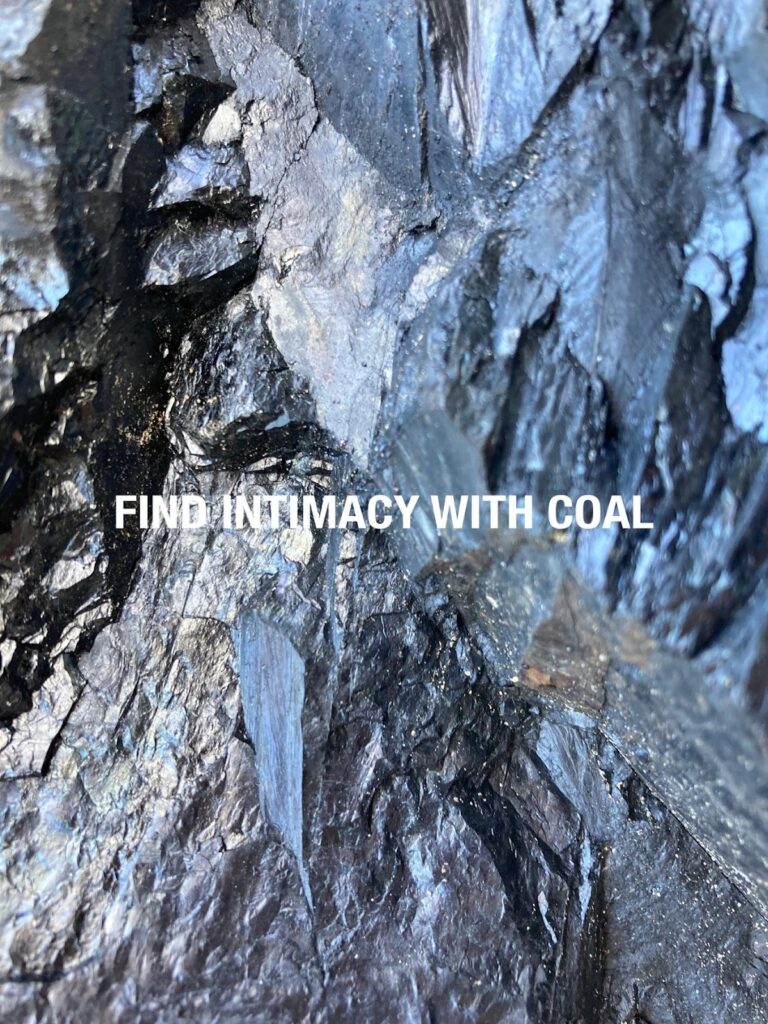
Fig. 2 Noel Meek, Coal Score (Intimacy), 2025, digital image.
I am calling here on Édouard Glissant’s relational poetics, or perhaps on Bourriaud’s relational aesthetics, but more importantly I am asking of myself as tangata tiriti, what is the impact of bestowing the more-than-human with personhood? As Amanda Yates (Ngāti Rangiwewehi, Ngāti Whakaue, Te Aitanga a Māhaki, Rongowhakaata) points out, the term more-than-human acknowledges “in holistic manner the geological, atmospheric, hydrological and biological whanaunga (kin) entities that compose the livingness of this world where animate/inanimate binaries do not hold.” [6, p. 102] But I find the term is still a placeholder of sorts. It is vague, non-specific, and still human-centric. These scores yearn for phrasings that circumvent this term to work with entities on their own ground.
Rather than agonise over terminology of a greater collective noun, I’ll stick to one being, Coal, and discuss how my world and that of Coal’s might overlap, in the hope that specificity might suggest multiple paths to pluriversal thinking.
These scores ask three questions: how might we participate in witnessing with Coal? How might we find intimacy with Coal? How might we act in solidarity with Coal?
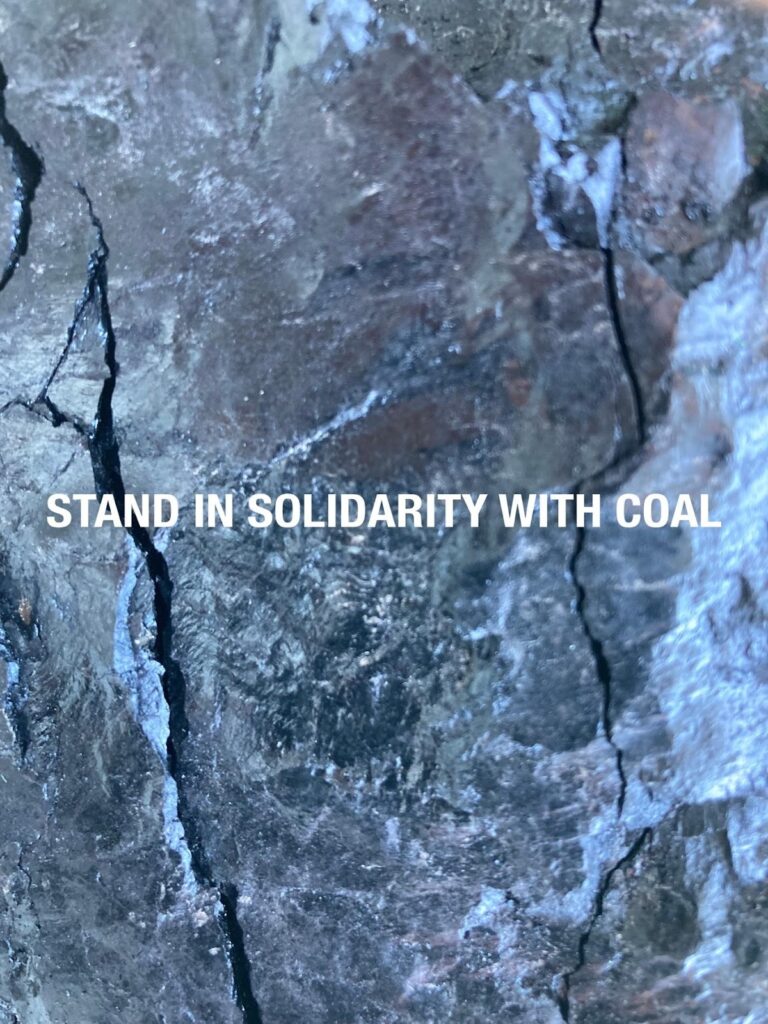
Fig. 3 Noel Meek, Coal Score (Solidarity), 2025, digital image.
I have taken several approaches to answering these ultimately unanswerable questions. My 2025 video work, Erthe toc of Erthe (speaking with Coal on the Denniston Plateau), attempted a position of witnessing. Playing a plastic trumpet, an instrument made of extracted fossil fuels resonating with Coal, while also drawing on the brass band traditions of the miners, I listened and responded to Coal through a speculative improvised music. Standing on the plateau, surrounded by open space and deep silence, I gleaned some small sense of the deep time Coal inhabits. The altitude combined with the acidic soil of the plateau encourages dwarfism in plants, creating a ground hugging and sound absorbing matt of shrubs, grasses, and harakeke that shrouds the undulating landscape. When bad weather rolls in the whole place becomes lost in dense fogs and torrential rains. Coal has resided here in these conditions of obscurity and quietude for some twelve million years, since Kā Tiritiri o te Moana were formed. Being with Coal here, thinking, listening, responding, witnessing, may give some insight into its world, but ultimately it is only the barest glimmer of a timescale that is hard to even conceptualise. As Richardson puts it: “Pushed to its most speculative ends, nonhuman witnessing might … exclude and elude the human entirely.” [9, p. 10]
Norwegian composer Espen Sommer Eide echoes this problem while talking about listening with the more-than-human, describing it as “a mixed up, messy, and unresolved translation process, full of misunderstandings and new beginnings.” [12, p. 28] This messiness inspired the next score, one asking us to engage intimately with Coal.
My brother, a mechanic at the Stockton Mine, obtained for me some very large pieces of raw coking coal, a high quality Coal largely shipped to Asia for steel making. These two 15 kilogram fragments are striking in both their beauty and their presence. The scores are partly comprised of close up photos of these fragmentary beings, as Coal in this form has suggested an intimacy that entering its landscape alone did not. The massive fragments suggest multi-sensual liaisons, entanglements of atmospheres and microbiomes, haptic relationships into knots of shared sonic territory. As a musician I’m drawn to touch and to breath with Coal, to use my sonic language to be close with Coal. I am currently developing a multi-channel video and sound work, the cuckoo sings for me, for the mountain (2026) that documents this necessarily messy process. Coal is remarkably fragile; it crumbles, cracks, and shears away with the lightest of touches. Luminous black dust coats your hands, clothes, floor. To handle Coal intimately requires both strength to manage its weight, and delicacy to avoid it collapsing completely. It is a very different prospect to the relationship contemporary mining has with Coal; soft human hands versus machines that tower two storeys above the whenua; a quiet listening as opposed to the roaring furnaces that would otherwise be Coal’s destination.
Witnessing and intimacy are possible paths into the final score, attempting to stand in solidarity with Coal. This is where we hash out what it looks like, feels like, smells like, to stand shoulder to shoulder with Coal, the biotic and the abiotic, to emerge as transbiotic allies. This is where we stand with Coal, not because we are afraid of the long term impacts of climate change related to Coal’s sacrifices, but because we stand against a rapacious ontology that objectifies and exterminates Coal and other more-than-human beings for nothing less than naked greed.
The solidarity score’s ur-score is Te Tiriti o Waitangi, our guide to human and more-than-human relations in Aotearoa. The te reo Māori version of Te Tiriti describes a pluriversal Aotearoa where the sovereignty of all beings is recognised and worlds may coexist without domination of one by another. [13] This relationship is messy. It pushes at and bursts through the boundaries our dominant ontology sets up to defend its position. It is from the breaking of these confines that solidarity with Coal emerges. Timothy Morton explains: “Solidarity, a thought and a feeling and a physical and political state, seems in its pleasant confusion of feeling-with and being-with, appearing and being, phenomena and thing, active and passive, not simple to gesture to [a] non-severed real, but indeed to emerge from it.” [14, p. 5]
To date, there have been no hīkoi with Coal, no rallies in solidarity with Coal. Placards are not held high supporting Coal, often they state quite the opposite. This third score stands unresolved, perhaps necessarily so. I welcome interpretations from readers.
[1] Todd, Zoe. “Your failure of imagination is not my problem,” 10 January 2019. [Online]. Available: https://anthrodendum.org/2019/01/10/your-failure-of-imagination-is-not-my-problem/. [Accessed July 2025].
[2] de la Cadena, Marisol and Blaser, Mario. A World of Many Worlds (Durham, NC: Duke University Press, 2018).
[3] Escobar, Arturo. Pluriversal Politics: The Real and the Possible (Durham, NC: Duke University Press, 2020).
[4] Halberstam, Jack. “Un/worlding: An Aesthetics of Collapse”, 2022.
[5] Carvalhoa, Antonio and Riquito, Mariana. “Listening-with the subaltern: Anthropocene, Pluriverse and more-than-human agency,” Nordia Geographical Publications, vol. 51, no. 2, pp. 37-56, 2022.
[6] Yates, Amanda. “Transforming geographies: Performing Indigenous-Māori ontologies and ethics of more-than-human care in an era of ecological emergency,” New Zealand Geographer, vol. 77, no. 2, pp. 101-113, 2021.
[7] Todd, Zoe. “Fish, Kin and Hope,” Afterall: A Journal of Art, Context and Enquiry, vol. 43, pp. 102-107, 2017.
[8] Vick, Silas, et al. “Succession Patterns and Physical Niche Partitioning in Microbial Communities from Subsurface Coal Seams,” iScience, vol. 12, pp. 152-167, 2019.
[9] Richardson, Michael. Nonhuman Witnessing: War, Data, and Ecology after the End of the World (Durham, NC: Duke University Press, 2024).
[10] Yusoff, Kathryn. Geologic Life: Inhuman Intimacies and the Geophysics of Race (Durham and London: Duke University Press, 2024).
[11] Fiadeiro, João and Eugénio, Fernanda. “An encounter is a wound,” SCORES, vol. 3, pp. 16-21, 2013.
[12] Eide, Espen Somer. “Exercises in Non Human Listening,” in Spectres 1: Composing Listening (Rennes, Shelter Press, 2019, pp. 27-32).
[13] Consedine, Robert and Consedine, Joanna. Healing Our History: The Challenge of the Treaty of Waitangi (London: Penguin, 2012).
[14] Morton, Timothy. Humankind: Solidarity with Nonhuman People (London: Verso, 2017).
Noel Meek is a Pākehā musician, composer, and artist based in Te Whanganui-a-Tara, Aotearoa. His works explore a form of radical care, where care is applied in new and unusual places, honouring the sovereignty of all things, human and otherwise.
Meek has presented works extensively internationally and throughout Aotearoa. In Aotearoa he has presented works with The Adam Art Gallery, The Govett-Brewster Art Gallery, Te Tuhi, St Paul St Gallery, Enjoy Contemporary Art Space, SCAPE Public Art, CoCA Toi Moroki, Circuit Artist Moving Image, and The Len Lye Foundation. Internationally he has worked with Cafe Oto, the Southbank Centre, the Edinburgh Art Festival, The Wire Magazine, Astral Spirits (Austin), SuperDeluxe (Tokyo), and Liquid Architecture. His films have shown at the Wairoa Māori and BFI London Film Festivals. He has published the books Archive Fever and Homage to Annea Lockwood. Noel is currently a PhD candidate at AUT.