Elli Leventaki
How do we perceive social complexity in the Artworld? Is it rendered purposefully transparent, thus excluding the lived experience of the younger and less privileged individuals? By examining the conditions from which current artworks emerge, one can assess the extent to which a creator’s class influences the outcome, as well as the levels of predetermination that accompany the careers of art professionals working under different circumstances. The goal is to unveil the multilayered social structure within the Artworld, which tends to appear diverse and inclusive, efficiently concealing the various material conditions of the people in the field. To that end, I trust in the inevitability of emergence to bring this matter forth and illuminate it though critical or even disruptive manifestations of curatorial or artistic practices, leading to a tangible systemic change that is much required.
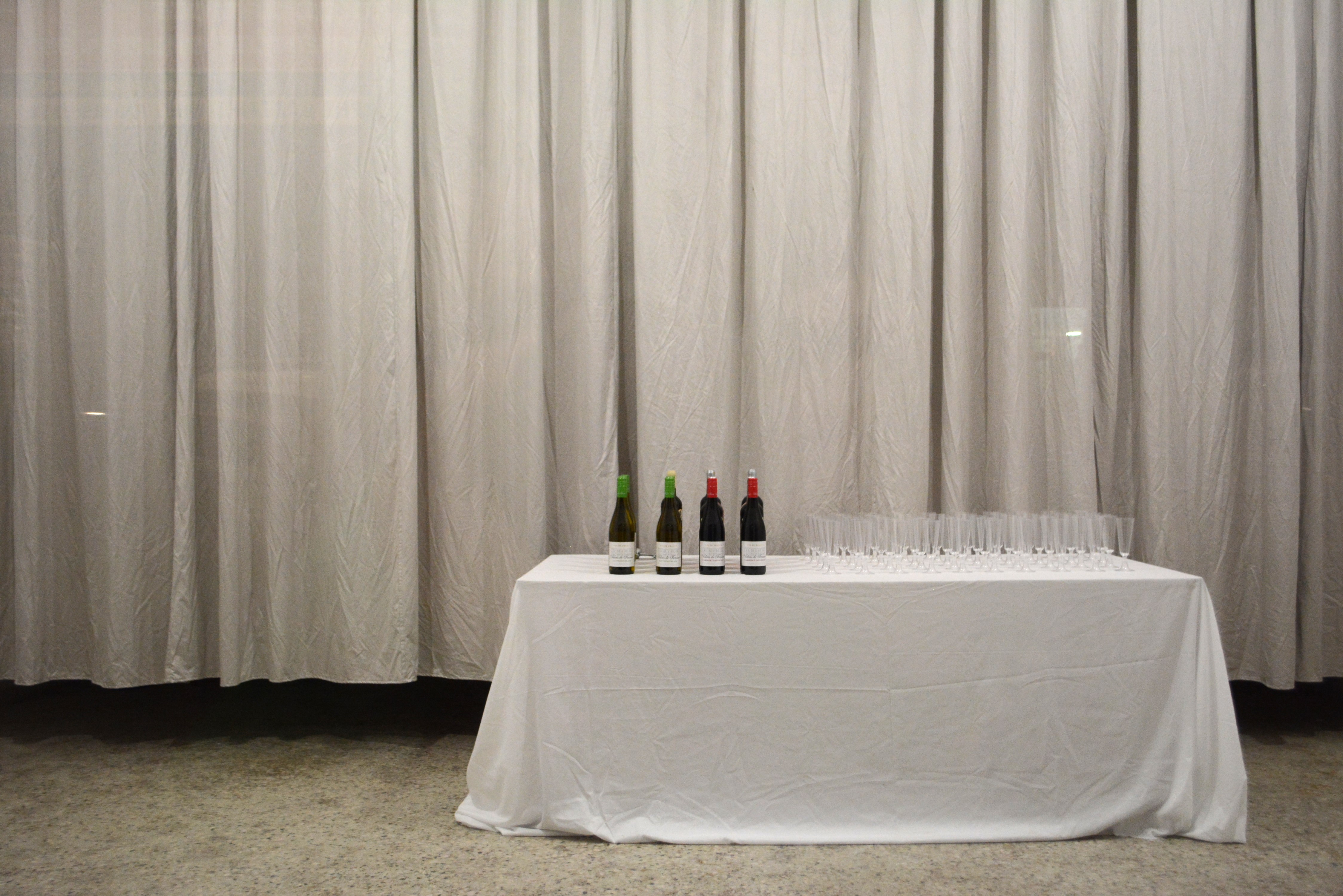
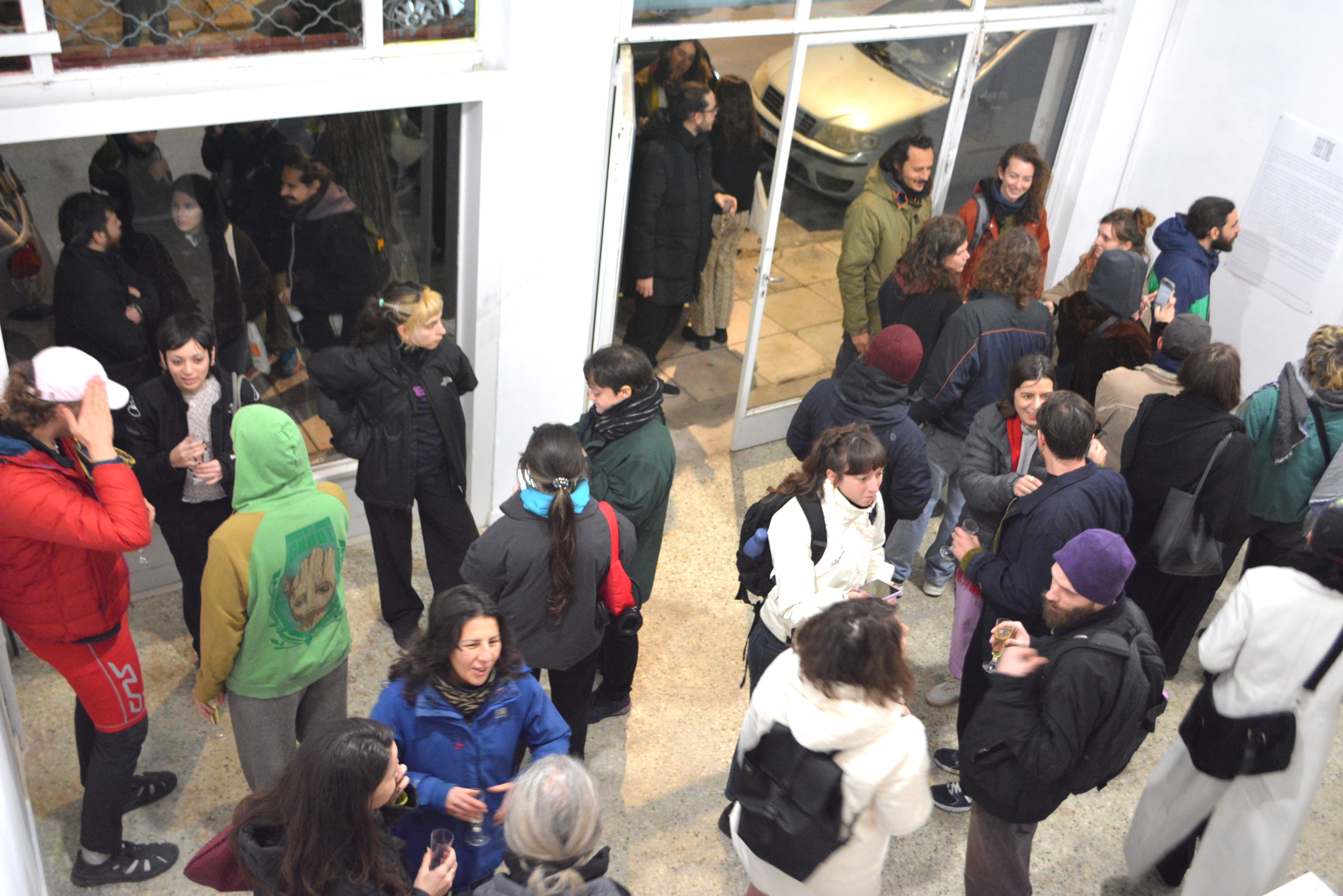
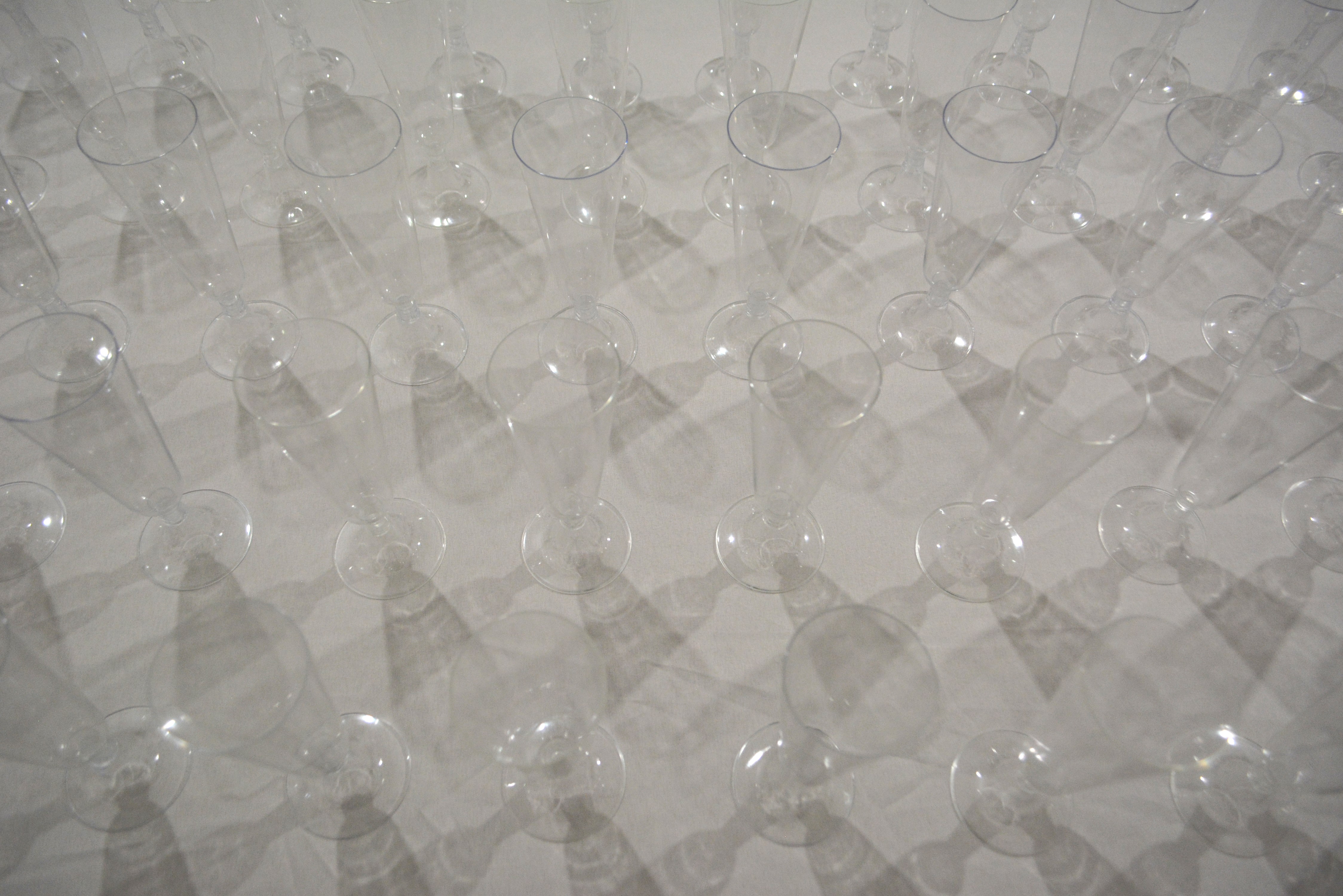
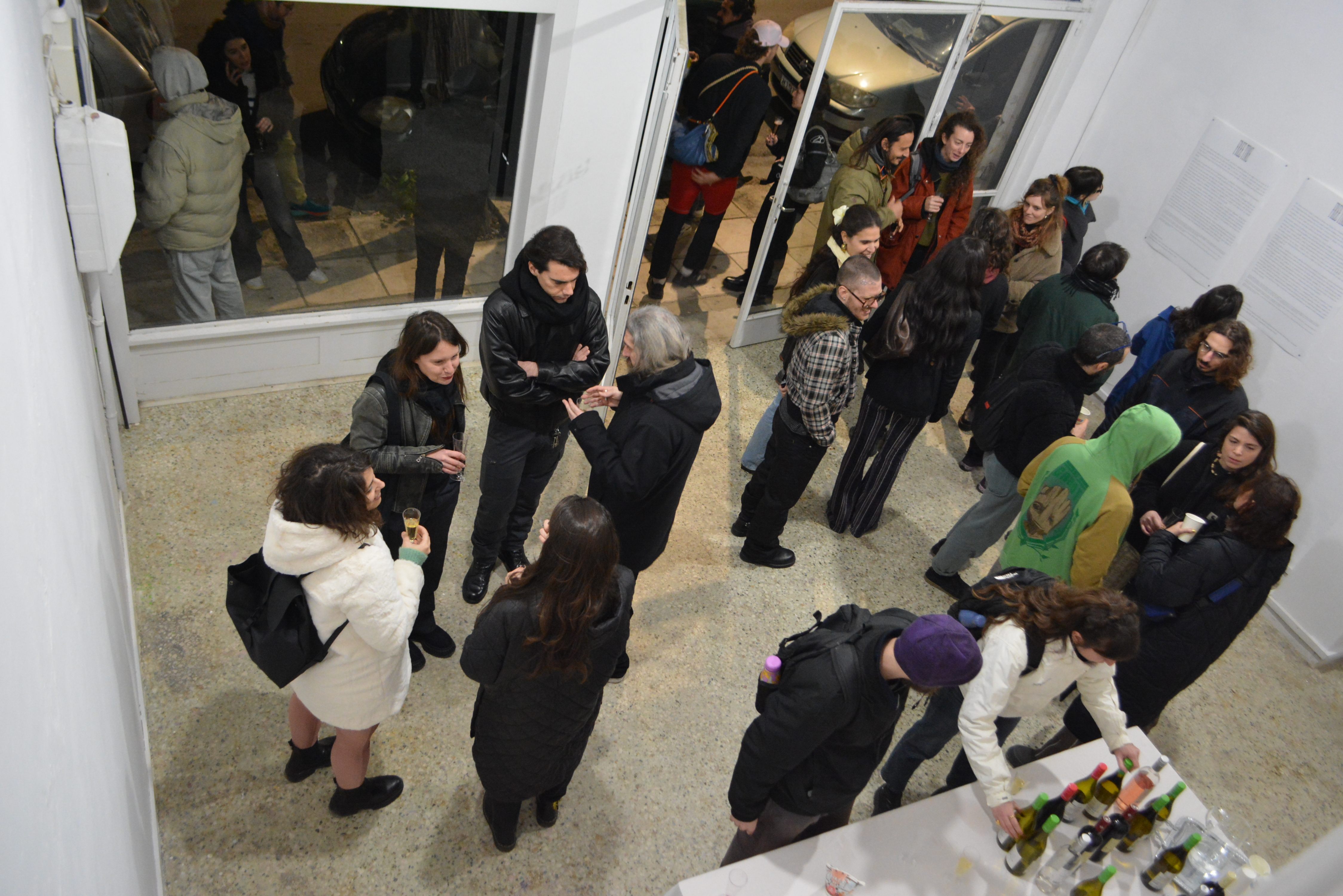
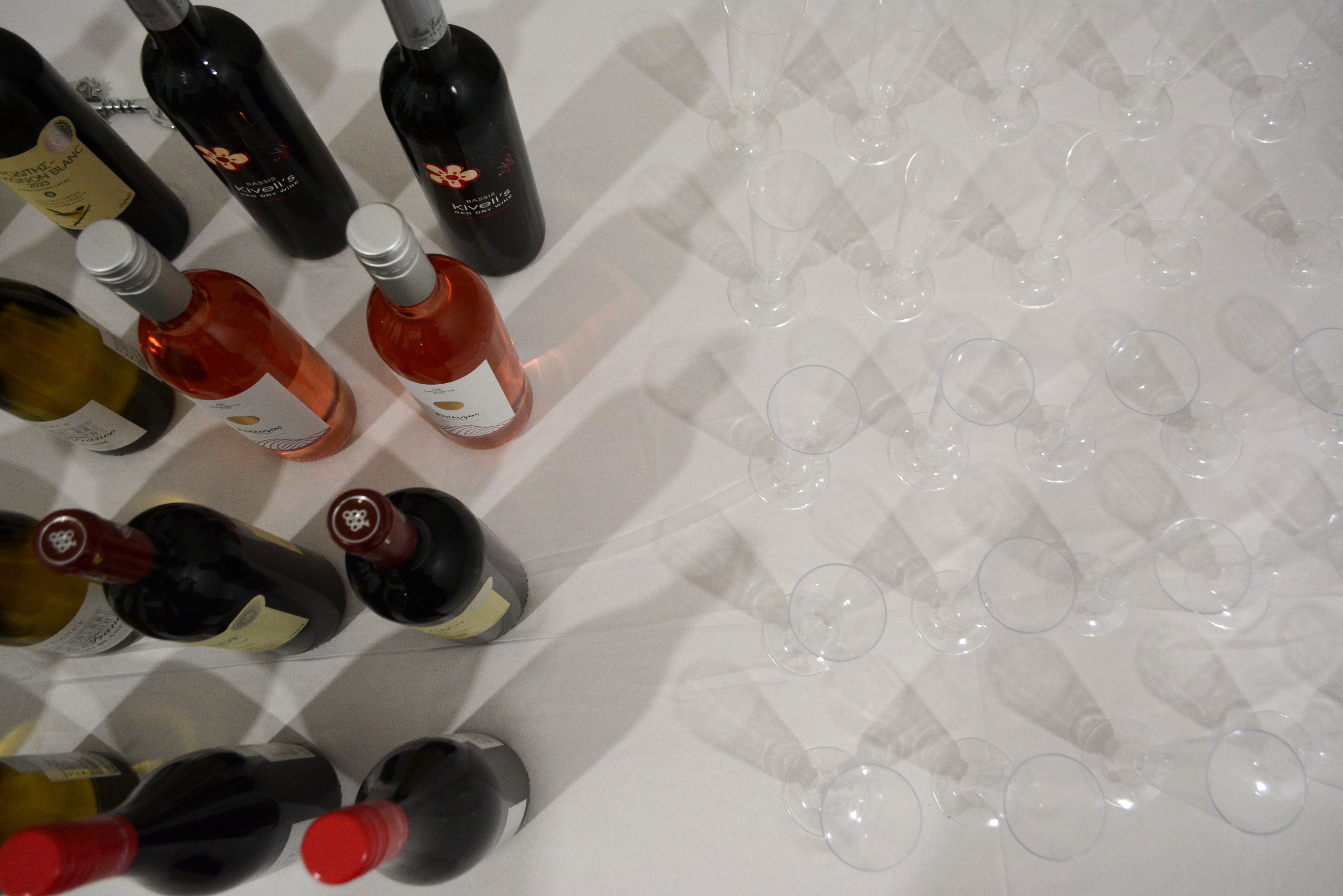
Drawing from my personal struggle of having a day job and working on other curatorial/academic projects at the same time, I realized that attending exhibition openings has been almost impossible. It is becoming more and more evident that, especially art professionals from younger generations, can barely afford to be present in all these parallel engagements since the vast majority of them have to do at least another job to sustain themselves in this precarious field, rendering what are deemed critical aspects of immaterial labor – like exhibition openings – unfeasible time-wise. In this light, I decided to curate ‘Free Time’, a one-off experimental event that took place at the Okay Initiative Space in Athens, Greece, on 16 January 2025 to address this issue, but also raise questions regarding the precarity of the industry overall. The main idea was to create a clean gallery-looking space, equipped with the standard fancy table with wine for the opening, but in this case with nothing else. The ‘exhibition’ didn’t include any artworks, but rather a list of names of non-participant artists, who were interested in supporting the idea with their presence. There was also no mention of the content during the communication of the event, so the people weren’t aware of the lack of artworks beforehand, nor of what exactly would be featured. ‘Free Time’ was essentially a type of happening that came together when visitors started to arrive and created the ‘opening experience’ themselves, rendering the exhibition also an artwork on its own.
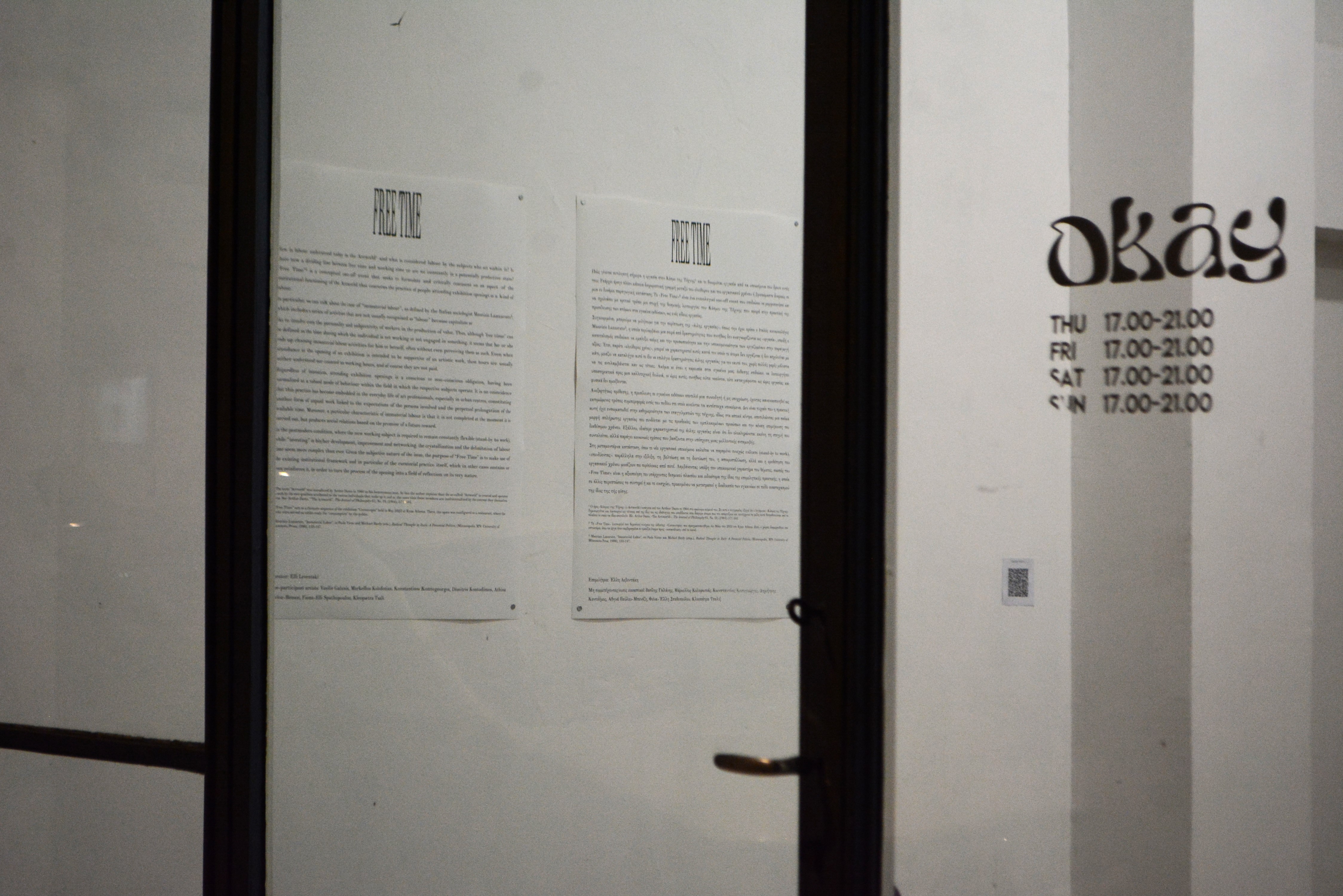
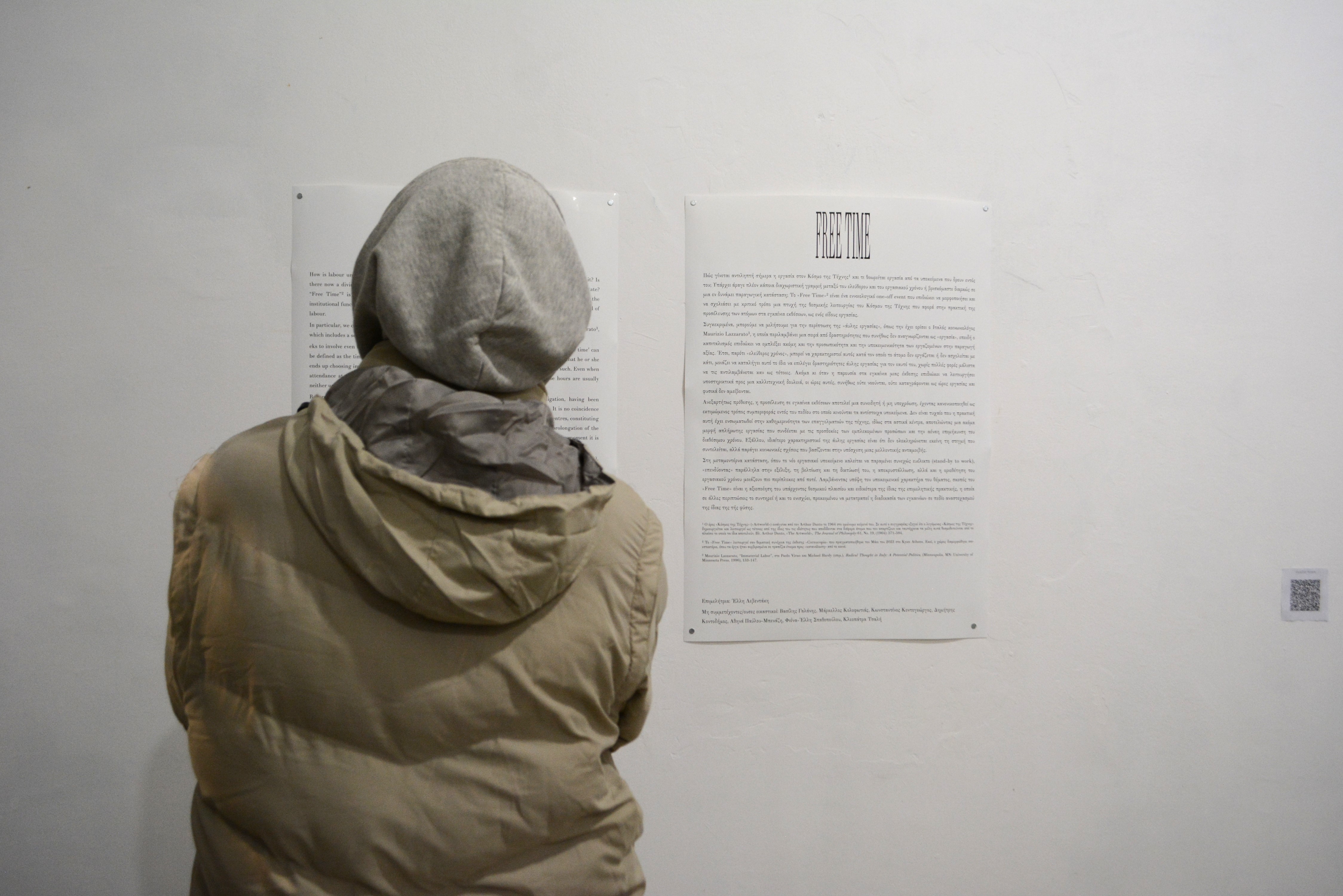
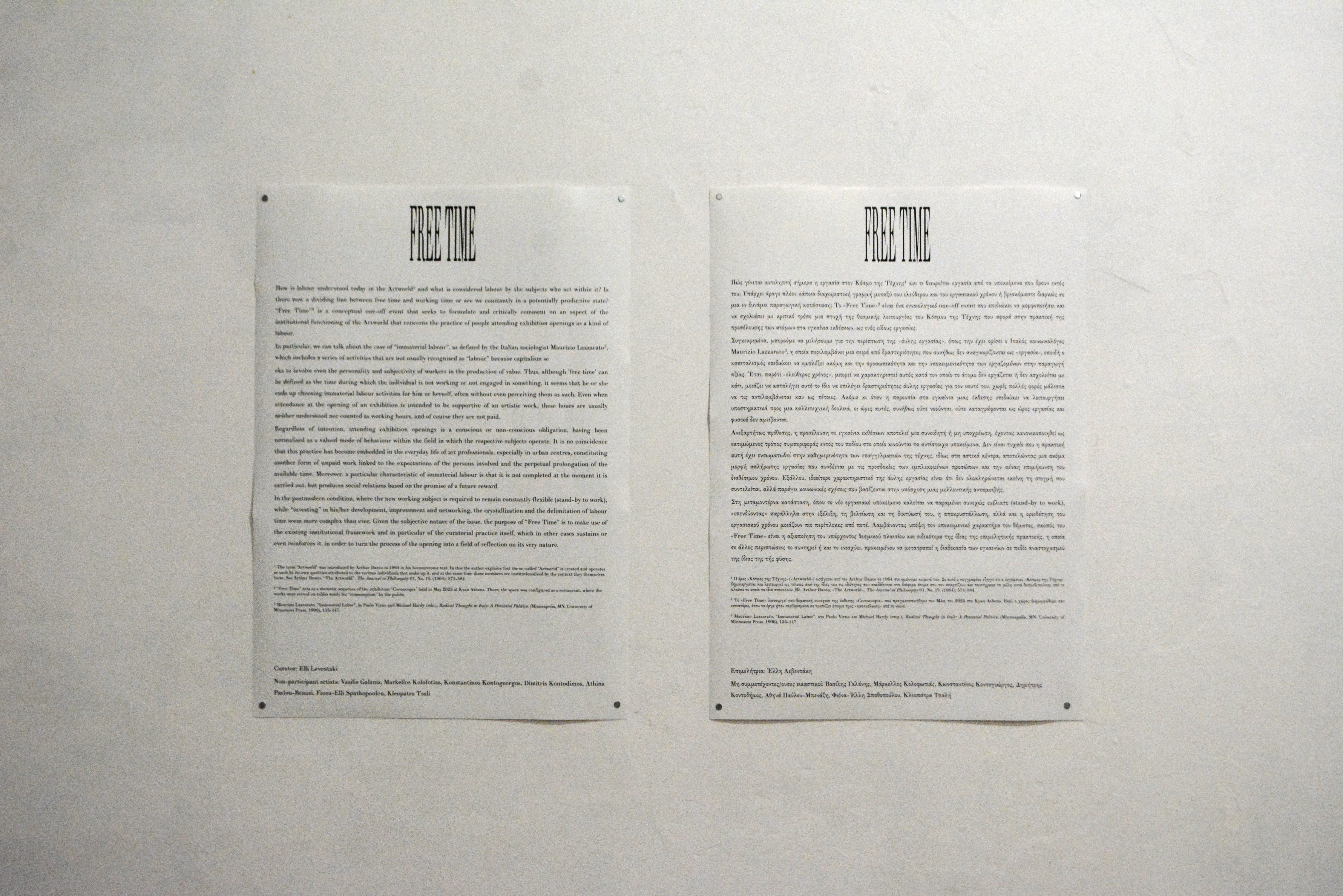
Upon their arrival, people looked initially puzzled by the absence of artworks and uncertain of their next move inside the space. However, after reading the curatorial text on the wall and helping themselves to a glass of wine, they stuck around the ‘exhibition’ area, casually discussing with other visitors as if this were a regular show. The curatorial text read:
How is labor understood today in the Artworld, and what is considered labor by the subjects who act within it? Is there now a dividing line between free time and working time, or are we constantly in a potentially productive state? ‘Free Time’ was a conceptual one-off event that sought to formulate and critically comment on an aspect of the institutional functioning of the Artworld that concerns the practice of people attending exhibition openings as a kind of labor.
In particular, we can talk about the case of ‘immaterial labor’, as defined by the Italian sociologist Maurizio Lazzarato, which includes a series of activities that are not usually recognized as ‘labor’ because capitalism seeks to involve even the personality and subjectivity of workers in the production of value. Thus, although ‘free time’ can be defined as the time during which an individual is not working or not engaged in something, it seems that they end up choosing immaterial labor activities for themselves, often without even perceiving them as such. Even when attendance at the opening of an exhibition is intended to be supportive of an artistic work, these hours are usually neither understood nor counted as working hours, and of course, they are not paid.
Attending exhibition openings is a conscious or non-conscious obligation, having been normalized as a valued mode of behavior within the field in which the respective subjects operate. It is no coincidence that this practice has become embedded in the everyday life of art professionals, especially in urban centers, constituting another form of unpaid work linked to the expectations of the persons involved and the perpetual prolongation of the available time. Moreover, a particular characteristic of immaterial labor is that it is not completed at the moment it is carried out, but produces social relations based on the promise of a future reward.
In the postmodern condition, where the new working subject is required to remain constantly flexible (stand-by to work), while ‘investing’ in their development, improvement, and networking, the crystallization and the delimitation of labor time seem more complex than ever. Given the subjective nature of the issue, the purpose of ‘Free Time’ was to make use of the existing institutional framework and in particular of the curatorial practice itself, which in other cases sustains or even reinforces it, in order to turn the process of the opening into a field of reflection on its very nature.
Once they had read the text, most of the people reacted with a smile of endorsement or a nod of relatability, and some of them were even looking for me to express their relief that ‘someone finally did this’. This sort of appreciation was much more frequent than I had initially expected and made me more confident regarding my own choice, which entailed presenting an exhibition that had no artworks. It seems that it was high time for such a public gesture, despite knowing that a part of the audience would not relate to it, due to their more privileged socioeconomic backgrounds.
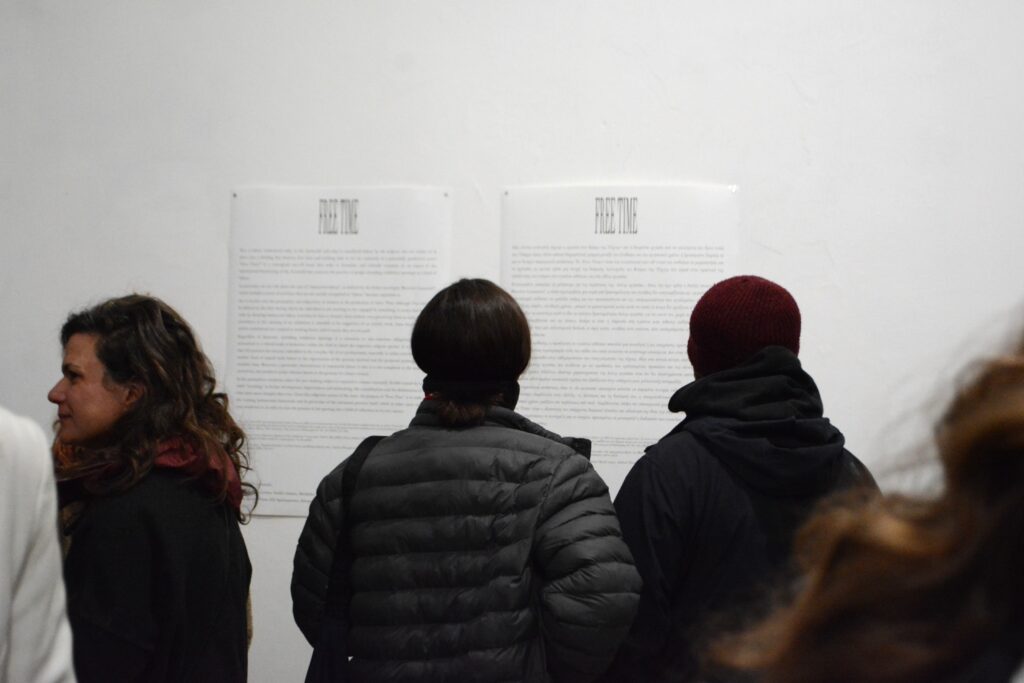
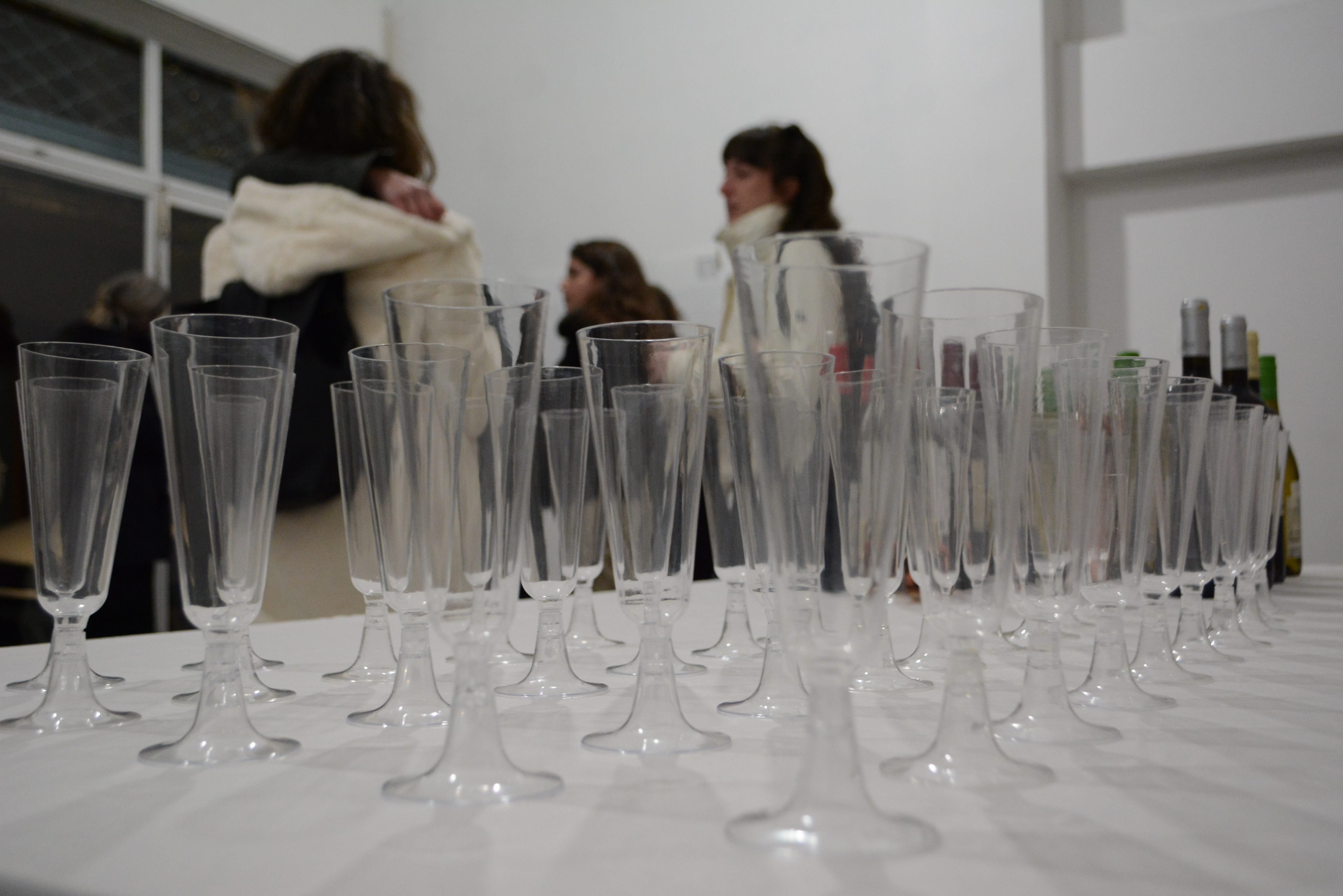
In some instances, once visitors realized that they were the ‘ingredients’ of this project, they seemed more self-conscious, but in parallel, they reflected on the practice of attending exhibition openings in general and the need for a broader discussion on such topics. What amazed me, though, was that the lack of artworks didn’t seem to bother anyone eventually. They all engaged in the same process of socialization and exchange, as they do in every opening, even though there was no exhibition to see in this case, attesting to the familiarity of this demeanor, as an almost automatic procedure within the context of the Artworld. The experience of this happening made it clear that there are several profoundly established routines and behavioral patterns within the Artworld, which are deeply rooted in the mentality of the vast majority of the people who consider themselves to be arts professionals. But who presupposed that every person has the time needed to attend various networking activities? And how did this become the norm and an inherent aspect of the job?
A series of so-called ‘complementary’ tasks—those additional responsibilities that are routinely expected of individuals working in the arts—are often carried out during what is nominally regarded as their personal or ‘free’ time. These duties may include, but are not limited to, attending exhibition openings and various cultural events, delivering public talks, offering unpaid professional advice, keeping up with academic conferences, visiting studios, and participating in artist residencies. While these activities are frequently framed as enriching or essential for career development, their unpaid nature contributes to an ongoing cycle of inequality. They end up diminishing the perceived value of the workers’ own labor and simultaneously set unrealistic expectations for others entering or already within the field, making it increasingly difficult for them to advocate for fair wages or proper recognition in similar circumstances. Taking into account that networking is now an ingrained part of the expected lifestyle of the members of the contemporary artistic scene, aiming for its elimination would be unrealistic at this time. However, realizing the class division that it causes and reinforces, and addressing its repercussions, could be the first steps towards constraining its effects and envisioning other formats of peer-to-peer exchange.
Because labor in the arts is frequently characterized by a high degree of abstraction, even though it can be intensely demanding both mentally and physically, it is often misunderstood or not fully appreciated. This widespread lack of understanding contributes to persistent misconceptions—such as the false belief that passion for creative work should naturally translate into long hours regardless of compensation, or the troubling assumption that individuals employed in the cultural sector ought to feel fortunate simply to have any work at all, even when that work is unpaid or compensated at extremely poor rates. However, lower-income individuals experience the world differently and have practical needs that cannot be fulfilled by their ‘passion’ or ‘love’ for what they do. It is great to be excited about what you do, but emotions aren’t enough to pay the bills. Needless to say, that ‘Free Time’ was also organized with zero budget, based solely on my own hours of unpaid labor for writing the text, coordinating the process, communicating the event, and setting up the space with the help of a few other people, who (naturally) did so for free as well. With this in mind, I deem it necessary to underline that romanticizing unpaid labor isn’t ok.
The Artworld itself has been built on a set of conventions that all individuals who want to exist in it must follow, and which naturally keep people of a certain background out of it. It is a fact that in previous times, the vast majority of the people involved in the arts came from the higher social classes and therefore didn’t have to work for a living while pursuing their artistic careers. For example, we can think of patrons like Popes and kings if we go back in time or of wealthy collectors and gallery owners in modern days, all of whom set the ground rules of the field based on what was common and doable for them. As a result, people to this day are asked to operate within a framework established by the elite, which a priori allows individuals belonging to the same social status to be able to ‘play this game’, without the interference of others. However, in recent years, there have been professionals of different backgrounds who have been aspiring and trying to establish themselves in the cultural field. The question is whether this is actually feasible, and what does it mean if it isn’t.
Reflecting on the current sociopolitical and economic circumstances, it seems that, once more, it is getting harder and harder for individuals from less privileged environments to actually sustain themselves from art-related jobs or be able to viably work in this sector. In this light, we need to understand what the options are that an individual has for gaining a proper wage. On the one hand, it is the so-called ‘day job’ that has already been mentioned, which functions as the main source of income, allowing a person to hold an art-related role in parallel, or even self-fund their artistic practice with it. Nevertheless, even if someone goes down this road and manages to find enough time to do anything additional within a workday, apart from this job, it is still exceptionally hard to stay active, engaged, and productive in the art field. Some days, there isn’t adequate time or energy to further develop an artwork, or focus on writing a theoretical text after eight (or more) hours of work, let alone attend an exhibition opening every other evening.
The other option is for one to rely primarily on external funding for their artistic practice and their entire livelihood. Despite this path seeming less exhausting, it is, in my opinion, much more precarious, and it is, in fact, among the main ills of the cultural sector. In Greece, for instance, the only relatively consistent source of annual financial assistance for arts professionals comes from the Ministry of Culture, provided, of course, that applicants are able to navigate the often dense and convoluted bureaucratic procedures involved. Subsequently, even if an application is successful, the amount given isn’t the one initially demanded, but rather half, or one-third of it (if not less), depending on a series of ambiguous justifications. Meanwhile, within the private sector, there exist a few prominent institutions that possess the resources to distribute a relatively small number of grants and scholarships each year. However, the sheer volume of applications these organizations receive is so overwhelming that the level of competition becomes almost surreal, bordering on the unreasonable, making access to funding feel less like a fair process and more like a game of chance.
That being said, I believe it’s about time that we honestly admit that the cultural sector lacks class inclusivity, even though it has been preaching diversity and acceptance in all other kinds of areas. How can we talk about pluralism when certain classes have exceedingly higher voices in the cultural sector than others – if they have any at all? Isn’t a polyphony necessary, anyway, when we wish to portray contemporary art as an inclusive arena? Are we hypocrites?
It seems urgent to talk about classism within the arts field, rather than pretending that it is not there, and that all the people involved in it have the same opportunities, connections, and resources. There have been so many discussions around the different types of inclusivity, especially in recent years, but not nearly enough regarding class inclusivity in the Artworld. Are there actually any people from the working-class part of the narratives and the fruits produced in the art scene? How much space do they get to express themselves, or time to dedicate to their practice, and eventually impact the content and priorities of the sector? The sad truth is that all the aspects of the cultural field that surround us are probably products and ideas of people coming from similar socioeconomic backgrounds, endlessly reproducing their own class. If you think about it, there is only a fraction of people (all members of the bourgeoisie) that shape the public taste with their collection choices, fund the most attractive open calls, select the topics and artists that they wish to support, and hold the key positions in many institutions and organizations.
There definitely needs to be more public discourse on this subject, but also hands-on action in regard to labor rights for all types of art professionals, from curators and art theorists to artists and art mediators. It is essential to be able to practice and live off an extended set of skills that we have developed throughout so many years of studying and (unpaid) internships. Otherwise, if we keep normalizing having to do multiple jobs for a living and being involved in the arts during our ‘free time’, we might as well abolish cultural studies as a whole. Why spend so much time and effort on mastering a discipline if it’s not going to be of any use for one’s professional future? Is it worth it to collect a bunch of degrees in the hopes of putting them into practice, if you know that another person of higher social standing will offer to do a similar task to yours for free? What is the point of struggling to make a living in a sector that is reserved for the privileged few and dismisses the rest? I am even wondering for whom I am writing this text right now, why do I bother to produce new knowledge by doing research, or pose critical questions to society by organizing events that I am not paid for.
Drawing from the initiative presented above, I would like to express my deep concerns on class inclusivity and the genuine labor accessibility in the Artworld, which seems to be much more limited than we care to admit. With this problematic in mind, I would like to propose the strategic use of both exhibition narratives and the physical or conceptual frameworks of exhibition spaces themselves as vehicles for change. This approach would not focus solely on the thematic content being presented, but would also involve rethinking and reconfiguring the very structures through which that content is delivered—ultimately aiming to confront and destabilize the systemic dysfunctions embedded within the cultural sector, initiating change from within its core mechanisms rather than merely commenting from the margins.
Bold critical gestures like ‘Free Time’ may function as creative and political tools that wish to challenge the existing status quo, raise questions based on real needs, and inspire further action. Through the process of emergence, more innovative and radical endeavors are bound to organically materialize, as a result of the ever-growing class inequity in the Artworld. In this regard, I would like to urge other people from around the world to use experimental formats and methodologies with all kinds of vehicles, in an effort to bring the issue of labor rights and class inclusivity into the spotlight. This is not a secondary or peripheral subject, but rather a fundamental and pressing one since it affects the very presence of certain groups of people in the arts. Unless there are solid steps taken towards a different direction from the existing one, it will soon be practically impossible for people outside the higher social classes to partake in the art field, influence its structure, and co-construct it on equal terms.
I firmly believe that only by engaging in diverse types of protest or counteraction, leveraging their own means and knowledge, arts professionals would be able to push for more inclusive strategies and cultural policies that could ensure a sustainable or at least decent standing in the field. In any case, this is a slow and meticulous process, which requires collective work and a mentality of unity, comradeship, and solidarity – values that are, unfortunately, getting scarcer to find within today’s society of individualism and competitiveness. By aiming to overcome these dominant concepts that are portrayed as ‘natural’ within the capitalistic framework, and at the same time persistently advocating for institutional change in the long term, there is a chance to truly affect the structural system of the Artworld for good. There is no other way for people of lower social classes to stand their ground, refuse to accept an art produced from and for the 1%, and truly be able to exercise their profession while having truly some free time.
May this be the beginning for the formation of a broader movement that would collectively promote class inclusivity in the arts, creatively and radically demanding fair pay, equal labor rights, and the end of precarity.
Elli Leventaki is an art historian, curator, and researcher. She is currently a PhD candidate at the Department of Theory and History of Art of the Athens School of Fine Arts. In parallel, she is involved in exhibitions and art projects, looking to address sociopolitical correlations within the field of contemporary art and critically comment on the invisible structures and principles of the Artworld. Elli is interested in contesting historically dominant narratives and stereotypic notions, especially those deriving from national and/or patriarchal contexts, while aspiring to advocate for gender equality through culture and engage in discourses on art-based labour. Elli Leventaki has collaborated with various institutions, cultural spaces, festivals, and art programs over the years, and her projects have been supported, among others, by the Greek Ministry of Culture, the J. F. Costopoulos Foundation, Culture Moves Europe, the ASFA Special Account for Research Grants, and Leventis Foundation. She has also been writing art-related texts for exhibition catalogues and scientific purposes and regularly participating in conferences and lectures in Greece and abroad. She is the Secretary General of AICA Hellas (2024-2026), a member of the Association of Greek Art Historians, and ICOM.