JG Mair
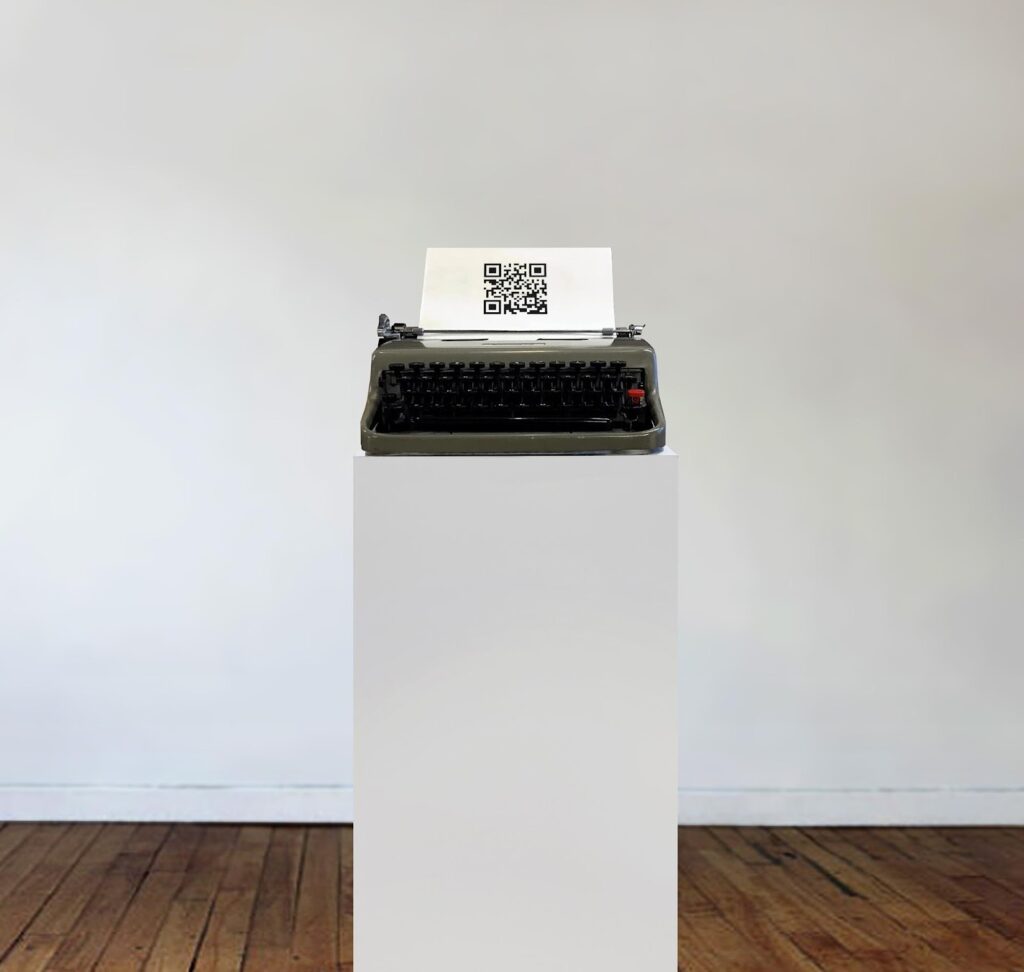
JG Mair, Keyboard 2.0, 2020, Paper, typewriter, plinth, HTML (Front typewriter view)
Keyboard 2.0 presents a 1952 Olivetti typewriter with a sheet of paper with a QR code, inviting participants to scan it with their mobile phones. Upon scanning, users discover that their phone’s QWERTY keyboard has been altered- each key now forms a hidden message or “cyku” (cyber-haiku). The keys and UI gradually fade as users type, leaving the isolated cyku suspended within the device’s frame.
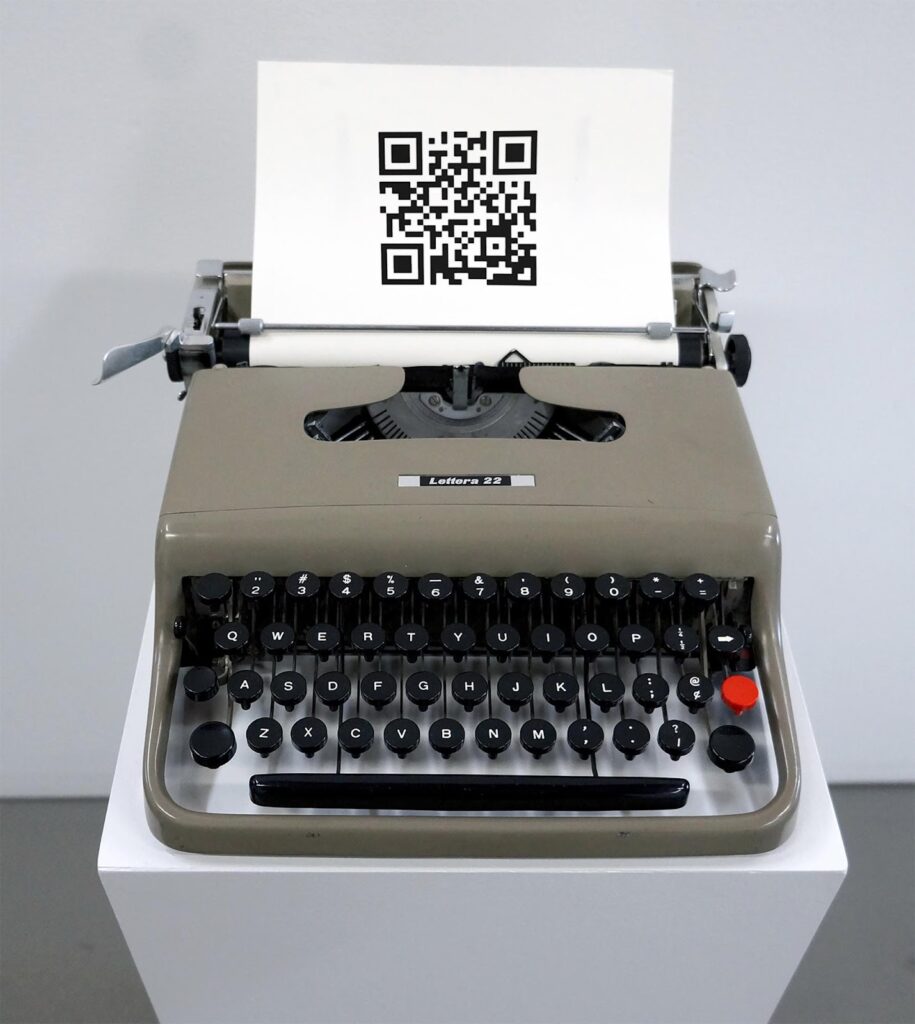
JG Mair, Keyboard 2.0, 2020, Paper, typewriter, plinth, HTML (Top typewriter view)
While texting in and of itself is not a novel concept, I have become increasingly interested in the repercussions of the ephemeral nature of digital text, especially in the form of direct messages, or ‘DM’ conversations. Over the past two decades, texting has rapidly become the dominant form of communication for the younger demographic, leading me to wonder what long-term effects may manifest. What impact do these frequent, almost compulsive exchanges have? The pre-edited, non-verbal interaction might feel empowering at first, but does it help or hamper the ability to form deeper connections and relationships? And what about those unable or unwilling to participate in this form of communication?
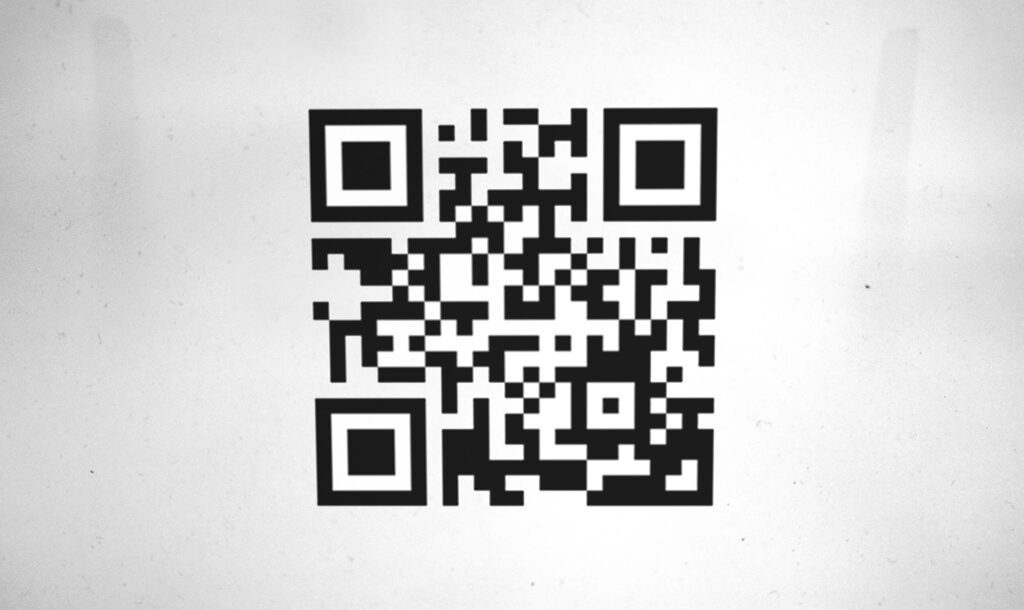
JG Mair, Keyboard 2.0, 2020, Paper, typewriter, plinth, HTML (QR code detail)
Like many others, I have participated in, and witnessed, the rise of this new mode of communication, one shaped by abbreviations, emojis, and an ever-deepening layering of memetic expression. We’ve come a long way since the humble colon-bracket smiley, which has set off a sort of arms race to reinvent familiar phrases and emotions with fresh, creative takes.
Rather than displacing traditional language, this ever-emerging “digital dialect” operates within its ecosystem: adaptive, symbiotic, and shaped by the feedback loops of our increasingly networked lives. It builds meaning not in isolation, but through interplay, weaving together image, gesture, and text in ways that reflect how we now relate, create, and communicate.
When it is shared comprehension, these forms foster intimacy, creating bonds through a unique cultural shorthand. However, their rapid evolution can also create voids, leaving some feeling like they are outside the “in” crowd.
Still, this mode of communication seems to reflect a broader forward momentum, both creatively and socially, an ironically natural progression within an increasingly tech-driven world.
Keyboard 2.0 aims to create an unexpected convergence that both disrupts and contributes to the dialogue of messaging, encouraging a moment of reflection by teleporting snippets of predetermined writing into this intimate, liminal area. The piece seemingly intervenes in a deeply personal space- our phones. Transforming the keyboard into an interactive text-based interchange with poetry invites contemplation about the refashioning of communication. The vintage typewriter becomes a portal, blurring the boundaries between artificial and real, past and present, private and public.
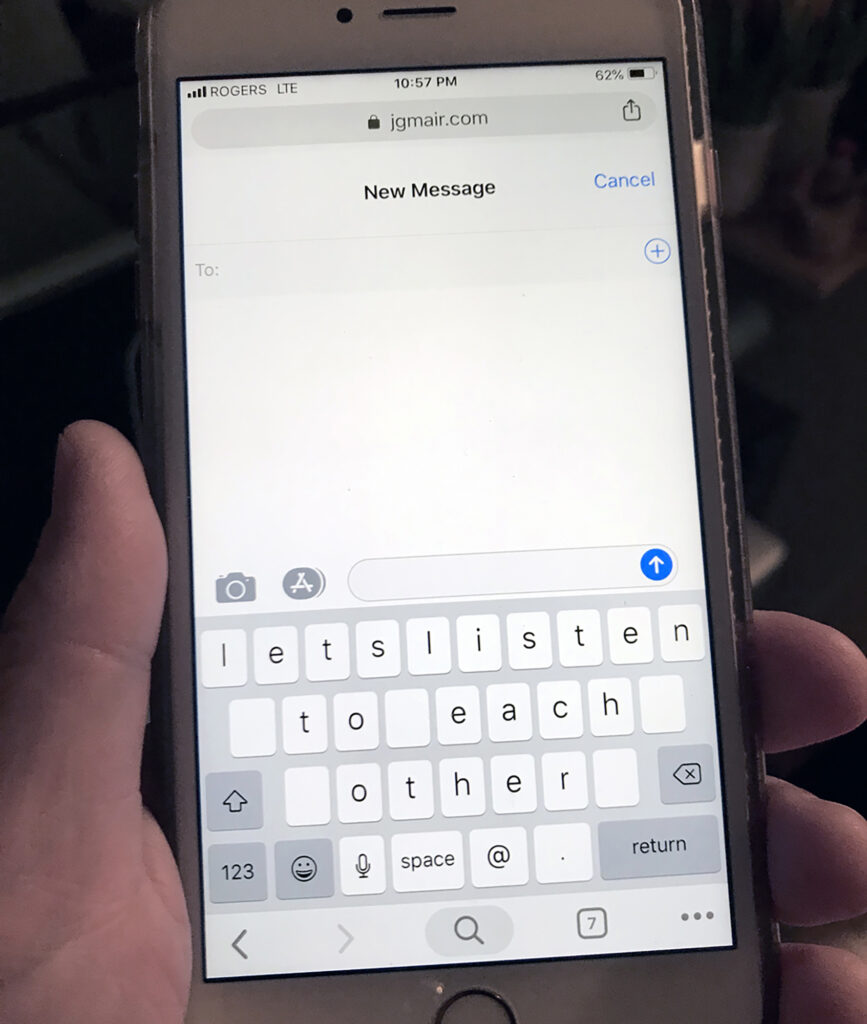
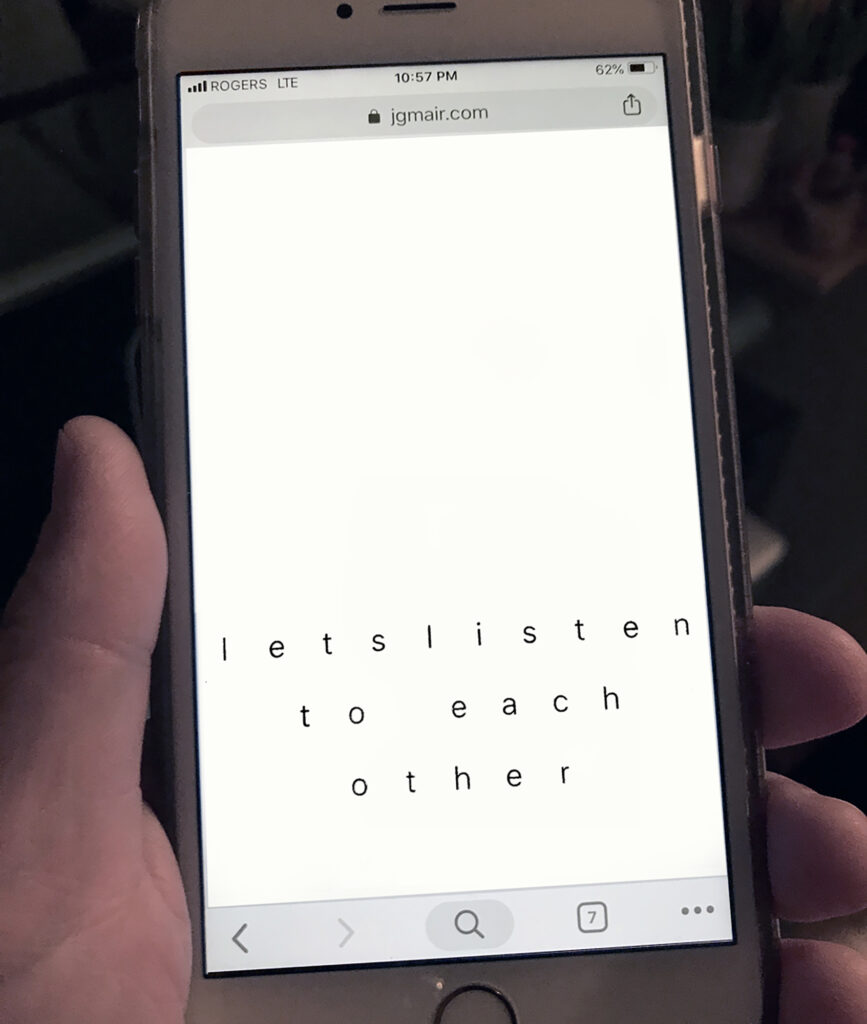
JG Mair, Keyboard 2.0, 2020, Paper, typewriter, plinth, HTML code (Texting keys)
To experience Keyboard 2.0, scan the QR code from the above image with your phone’s camera OR enter the browser URL- jgmair.com/kb2. On your phone, a digital keyboard will appear. Start typing until the keys vanish, revealing the text-only cyku. Once it appears, press the next prompt to repeat the process and generate a new cyku. Keyboard 2.0 is compatible with both Android and iOS devices, but only works on smartphones. *Contains colourful language
JG Mair is an artist living and working within the shared, unceded, ancestral territories of the xʷməθkʷəy̓əm (Musqueam), Sḵwx̱wú7mesh (Squamish), and səlilwətaɬ (Tsleil-Waututh) Nations, also known as Vancouver, British Columbia. His work combines painting, writing, video, and web. With a BFA from the University of Victoria and a BEd (Art) from the University of British Columbia, he has exhibited in Canada, the United States, South Korea and Japan. His art practice deals with the pluralities of perception as manifested through both tangible and digital material manipulation. Code for Keyboard 2.0: Bill Pettigrew